
When Oscar Piastri’s Dutch Grand Prix win at the end of August left Max Verstappen 104 points off the Drivers’ Championship lead, almost everyone in the Formula 1 fold – including the Dutchman himself – assumed his hopes of winning a fifth consecutive title were over.
Verstappen was also 70 points clear of Piastri’s team-mate Lando Norris, who would have completed a dominant McLaren one-two at Zandvoort had it not been for a late technical fault that forced him to retire from the race.
Second place for Verstappen at his home race represented just his second podium during an eight-race winless streak that saw Christian Horner sacked as Red Bull team principal and replaced by Laurent Mekies.
Not only did Verstappen have a huge deficit to overcome with nine laps to go, but his Red Bull team seemed to have no answer to McLaren’s pace.
Fast forward three months and Verstappen heads into the final round of the season in Abu Dhabi with a legitimate chance to extend his title streak.
He has remarkably scored 108 more points than Piastri across the last eight rounds to sit ahead of the Australian, but trails leader Norris by 12 points going into this weekend’s desert decider.
Although there has been an impressive upturn in Red Bull’s performance, but for poor execution by McLaren during the run-in, the door would already have been closed on Verstappen’s title hopes.
How Red Bull got back on track
The season appeared to be spinning out of control for Red Bull as Verstappen endured his worst weekend of the season – at least in terms of pace – at the final round before the summer break in Hungary, qualifying eighth and finishing ninth.
Zandvoort represented a remarkable improvement after the break, but Verstappen was still powerless to challenge the McLarens, albeit in second place as a result of Norris’ accident.
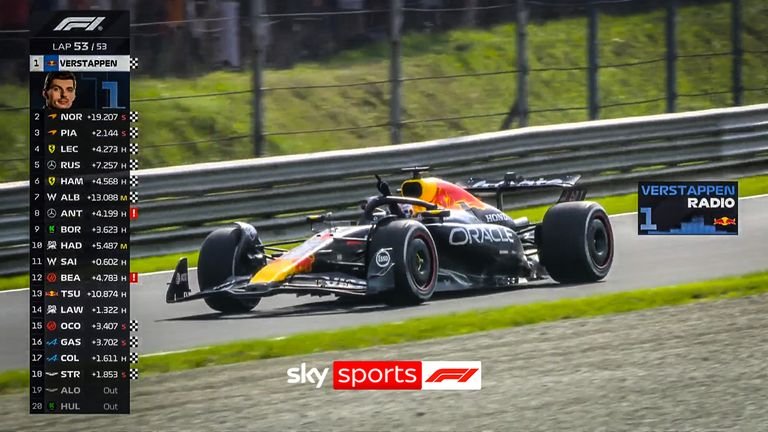
Red Bull’s Max Verstappen wins the Italian Grand Prix
The turning point came when Red Bull brought a significant floor upgrade to the Italian Grand Prix, which would allow Verstappen to take pole position and win at Monza before repeating the feat next time out in Azerbaijan.
Since the Monza upgrade, Verstappen has finished on the podium in eight consecutive races and won four.
Much of the toxicity that had plagued the team in the latter stages of Horner’s tenure, for which it must be said the long-serving boss was not solely responsible, appeared to disappear under Mekies’ leadership.
Although they still haven’t been able to get many points out of Yuki Tsunoda across the garage, both Verstappen and the team have been excellent during his late-season surge.
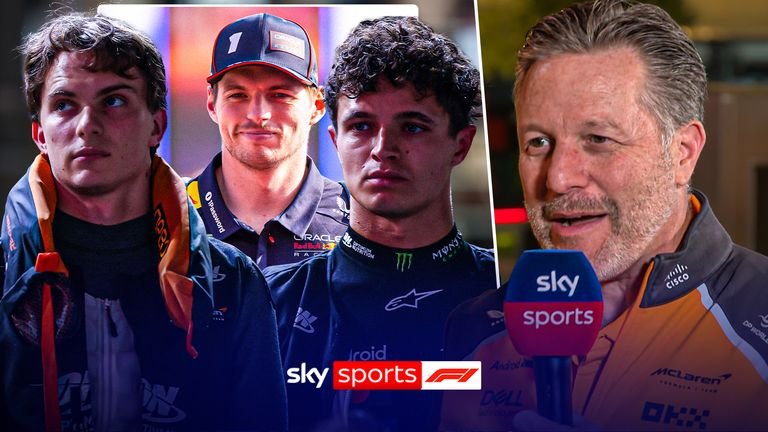
McLaren CEO Zak Brown compared Max Verstappen’s aggression to a character from a horror movie during the Qatar Grand Prix
Baku blunders give Verstappen hope
Significant errors from McLaren and their drivers, particularly Piastri, had been few and far between during the first two-thirds of the season.
It therefore came as a huge surprise when Piastri crashed out of both qualifying and the race on the streets of Baku.
Some theorized that the Australian’s confidence or concentration might have been shaken by McLaren instructing him to hand second place back to Norris a lap earlier in Italy after the Briton lost time during a slow pit stop.
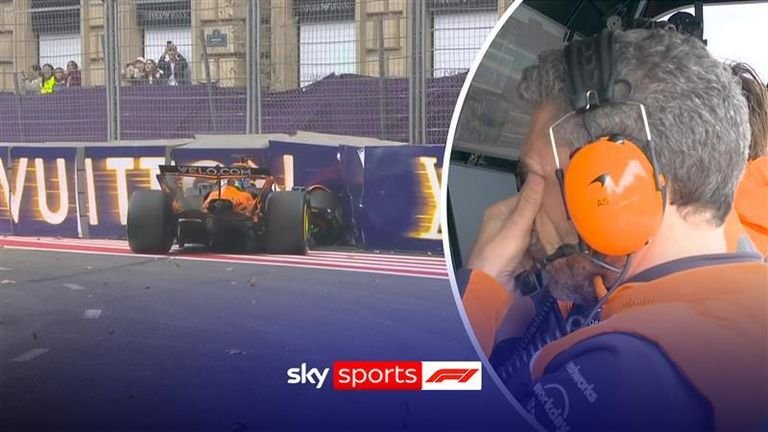
McLaren’s Oscar Piastri had a disastrous first lap at the Azerbaijan Grand Prix when he crashed out of the race after hitting the wall
Whatever caused the mistakes, they led to a spectacular drop in form that would see him go six races without a podium.
Norris was guilty of not taking full advantage of Piastri’s mistake as he failed to make a crucial final lap of qualifying, leaving him seventh on the grid, before a couple of sloppy moments during the race meant he had failed to improve his position at the checkered flag.
Verstappen was clinical and made big gains on both McLarens to give himself a glimmer of hope.
Piastri causes Austin collision after ‘aftermath’ fiasco
Tensions were heightened at McLaren after Norris blasted past Piastri on the first lap of the Singapore Grand Prix to take third, with their positions remaining unchanged at the end of the race.
Following complaints from Piastri on the radio at the time, McLaren principals Zak Brown and Andrea Stella initially said they had viewed the contact as a racing incident, but two weeks later at the United States Grand Prix, Norris announced he would face consequences enforced by the team.
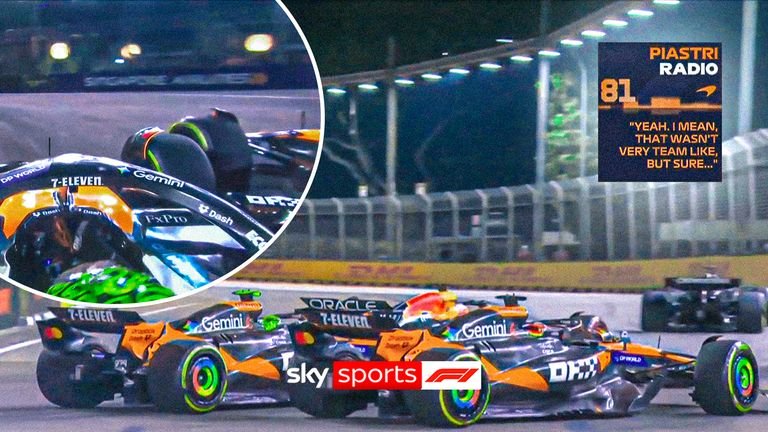
Oscar Piastri dumps on the radio as Lando Norris comes by after contact
It became clear that the consequences were to give Piastri priority in terms of choosing whether to race before or after Norris in the crucial closing stages of the qualifying sessions.
The situation dominated the build-up to the Sprint weekend in Austin as the media tried to figure out what the unspecified “aftermath” was.
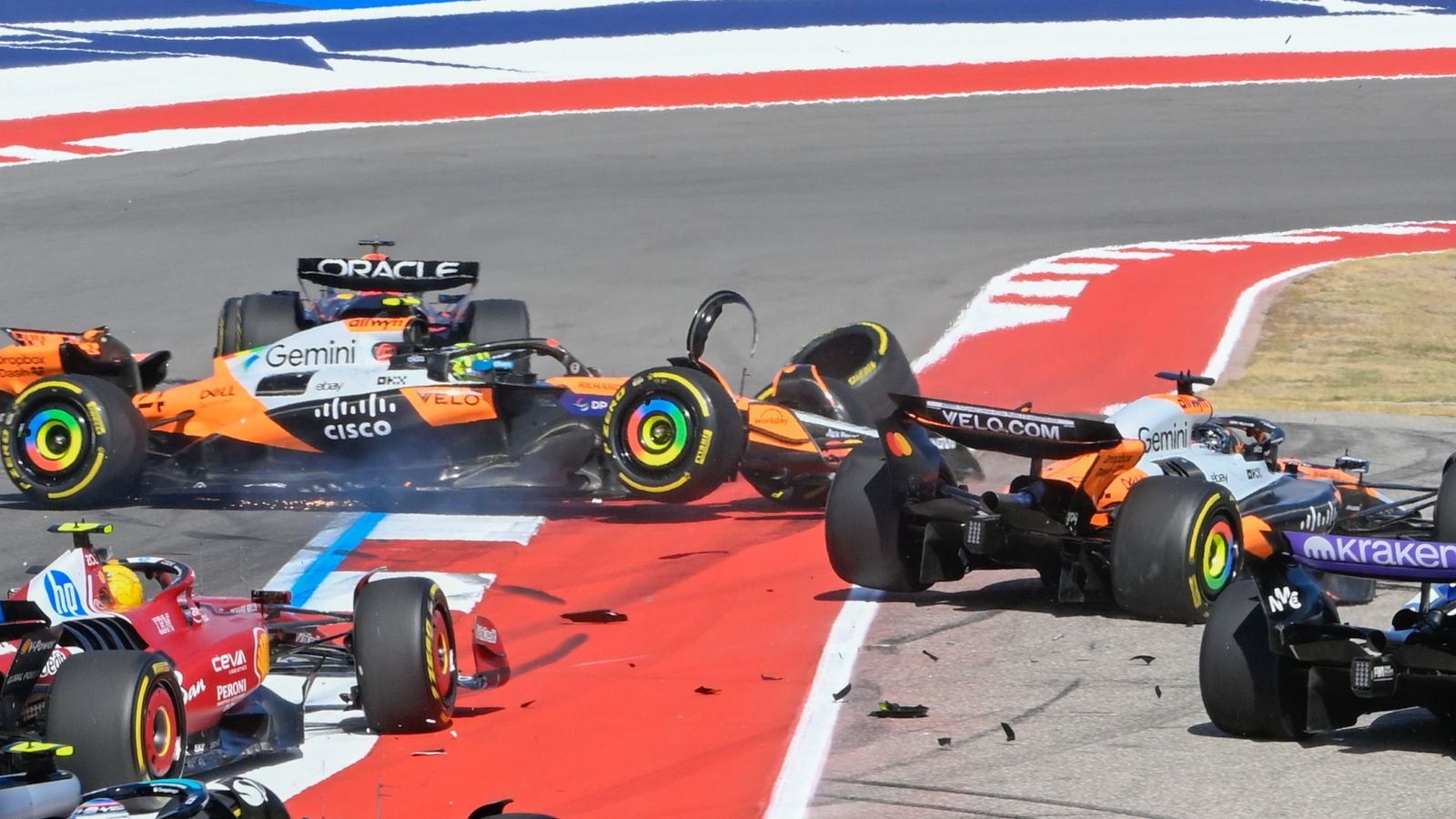
They ultimately did not last long as Piastri made a reckless move at the start of the sprint which took out both him and Norris, after which McLaren confirmed they had restored level playing field.
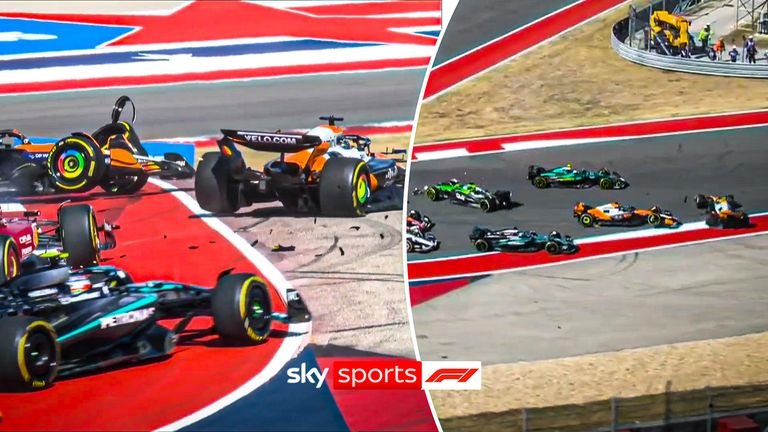
Oscar Piastri and Lando Norris collide at the first turn after dramatic multi-car contact forces both McLarens to retire at the US Grand Prix Sprint!
Verstappen won the Sprint to make up eight points on both McLaren drivers, but their exit from the first corner also meant the team was unable to gather vital data from the Sprint to inform their decisions for the rest of the weekend.
Norris qualified and finished the race second, while Piastri could only manage fifth after qualifying sixth, meaning Verstappen was within 40 points of the lead with five laps to go.
Vegas’ double disqualification gives Verstappen a lifeline
Norris had reduced what was a 34-point deficit to Piastri to 14 points and the Brit then produced perhaps his best two weekends of the season to take control of the title race.
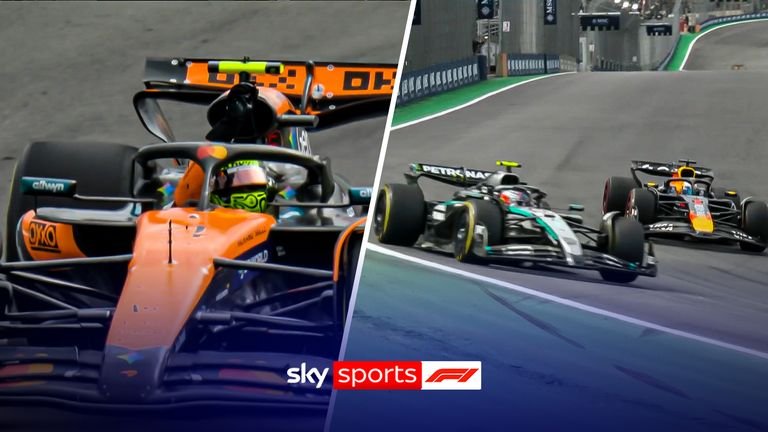
Last-lap drama as Lando Norris wins in Sao Paulo as Kimi Antonelli holds off charging Max Verstappen to take second
He took pole and victory at the Mexico City Grand Prix to regain the championship lead for the first time since April, then won the Sao Paulo Sprint when Piastri unfortunately crashed out, before following it up with another pole and victory to make up for it.
Despite producing a thrilling comeback drive from a pit-lane start to finish third in Brazil, Verstappen trailed Norris by 49 points after the Interlagos weekend and said he could “forget all about” winning the title with only the season-ending triple header remaining.
Norris appeared to have put himself on the brink of sealing his maiden championship when he finished second to Verstappen in second place in Las Vegas, but the Dutchman’s hopes would be dramatically revived hours after the checkered flag when both McLarens were disqualified for breaching the floorboard wear limit during the race.
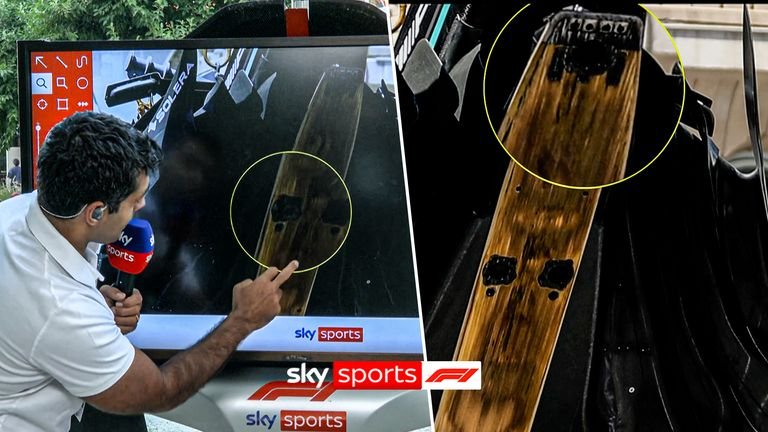
Sky Sports F1’s Karun Chandhok explains what a ‘skid block’ is and why McLarens failed to comply with FIA technical rules in Las Vegas
Scoring 25 points on each of the McLarens, Verstappen pulled level with Piastri 24 points behind Norris with just two rounds remaining in Qatar and Abu Dhabi. The disqualification actually represented something of a reprieve for Piastri as he avoided losing six more points to Norris.
A misjudgment of the set-up by McLaren led to extreme jumping during the race, with the blunder all the more painful for Norris given the position of strength he had established.
Bad strategy call hurts Piastri as Norris falters
The Qatar Grand Prix offered Norris his first opportunity to win a maiden title, but the weekend did not go to plan for the Briton.
It was Piastri who finally found his form to take pole and win in the season’s final Sprint sessions, with Norris settling for third in both, with Verstappen fourth.
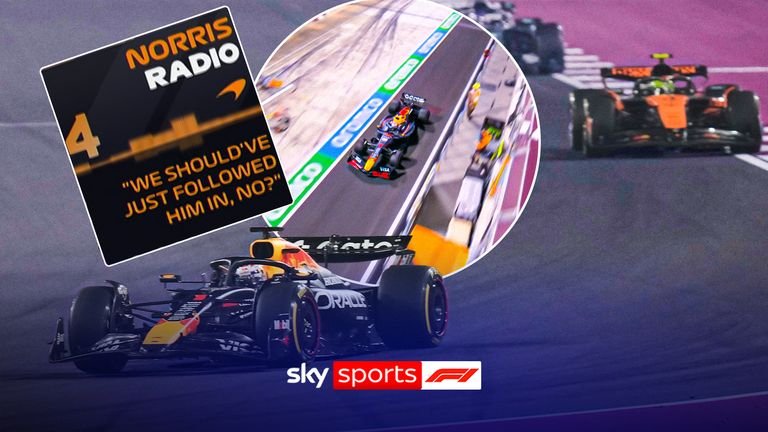
Max Verstappen sits under the safety car as Lando Norris stays out at the Qatar GP
Norris allowed Piastri to take pole for the main race when he blew his final flying lap in qualifying, but he was still reasonably well placed in second ahead of Verstappen. Too much wheelspin in the second stage of Norris’ start allowed Verstappen to grab second place, but the key moment of the race was still to come.
With a one-time limit in place on how many laps each set of tires could be used for due to fears of possible punctures, each driver would be required to make two pit stops during the race as long as there were no red flags, which there were not.
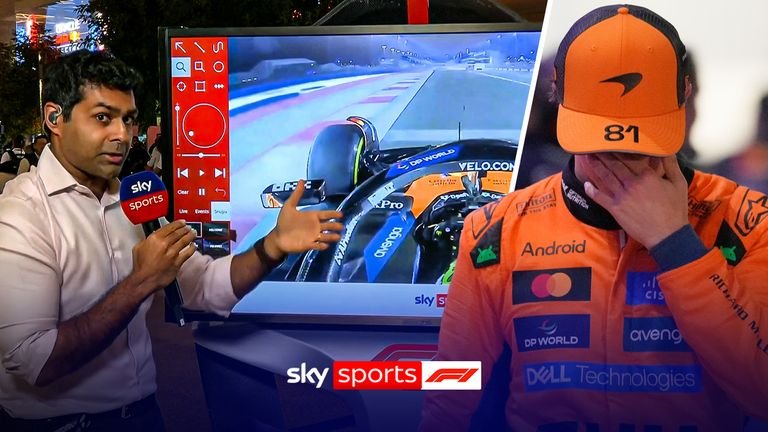
Karun Chandhok is on SkyPad to analyze whether McLaren’s decision not to put Oscar Piastri under the Safety Car on lap seven cost him victory at the Qatar GP
Therefore, when a Safety Car was sent out after a midfield collision on lap 7 with exactly 50 laps to go, almost every strategist in the pit lane saw it as a no-brainer to take advantage of the minimized time loss and lock into two 25-lap stints with another stop on lap 32 to take them to the end of the race.
McLaren chose not to stop either the then leader Piastri or Norris, and would later refer to a desire to maintain strategic flexibility and avoid the risk of getting into traffic if some cars behind were not placed under the Safety Car.
Stella would admit that concern over Norris being further penalized by having to wait in a possible double stack of McLarens was a factor in the decision, but not the main one. Whatever the reason, the lack of further Safety Car interruptions during the race meant that the decision proved to be a poor one.
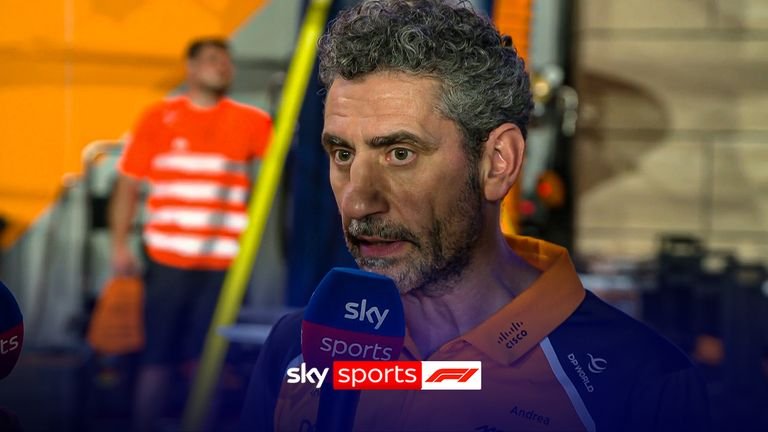
Andrea Stella admits McLaren made mistake by not getting under safety car after Max Verstappen wins Qatar GP
Piastri tried valiantly to chase down Verstappen but had to settle for second, while an out-of-sorts Norris looked set to finish fifth, until a mistake by Mercedes’ Kimi Antonelli on the penultimate lap allowed the Briton to move up to fourth and claim two more crucial championship points.
That moment ensured Norris remains a very clear favorite going into the final weekend of the season, with a 12-point lead over Verstappen, while Piastri sits four points further back, but McLaren’s autumn mistake has opened the door to what would be considered the greatest comeback in the sport’s history.
The 2025 Formula 1 season concludes with the title-deciding Abu Dhabi Grand Prix live on Sky Sports F1 from Friday. Stream Sky Sports with NOW – no contract, cancel anytime