
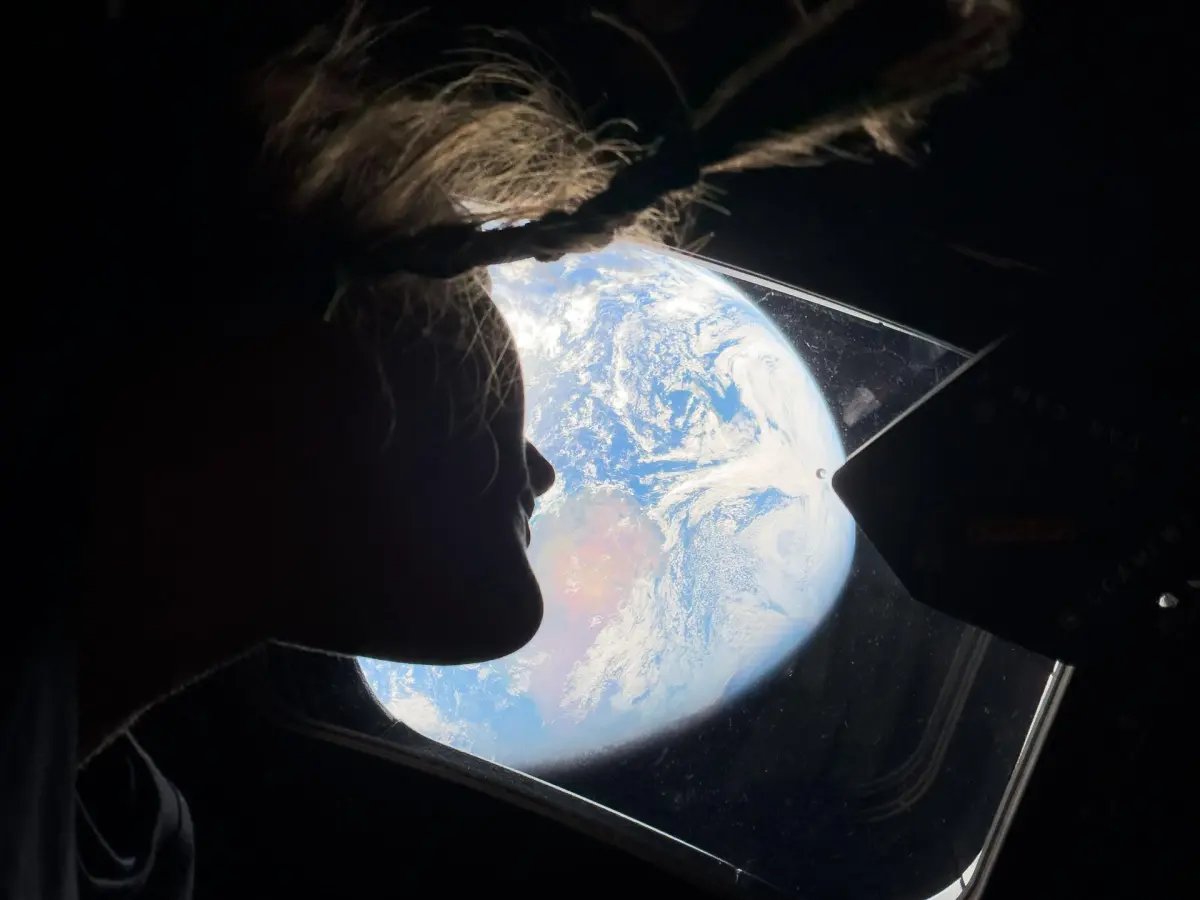
NASA’s Artemis II crew of four astronauts from the United States and Canada will return to Earth on Friday after their historic trip to the far side of the moon.
Reid Wiseman, Victor Glover, Christina Koch and Jeremy Hansen have spent 10 days aboard the Orion spacecraft. They are expected to start coming back in at 7:33 PM ET with a splashdown at 20.07
NASA has a live feed for when the crew lands in the Pacific Ocean later today. The Orion spacecraft is expected to splash down off the coast of San Diego, California.
The Artemis II mission marks the first time humans have ventured into lunar orbit in more than 50 years. The crew traveled further from Earth than any humans have before, reaching an estimated 252,760 miles from our planet. That’s the same distance as traveling between New York City and Los Angeles about 100 times, only the astronauts are inside a capsule with 330 cubic feet of habitable space, which is about the size of two minivans.
The purpose of the Artemis II mission is to gather data and insights that will help NASA prepare for future lunar missions and landings — the astronauts put the Orion spacecraft through scheduled tests to evaluate how it would fare with a crew in deep space. This involves testing communication systems with colleagues on Earth, making orbit adjustments and conducting a safe re-entry and splashdown.
The splashdown can be one of the most dangerous moments of the entire mission. On the 2022 Artemis I mission, which did not have a crew, Orion’s protective heat shield was unexpectedly damaged as it returned to Earth. The heat shield is made of AVCOAT—a material designed to slowly dissipate and protect the crew from temperatures approaching 5,000 degrees as it enters Earth’s atmosphere—but the shield was charred and cracked in places, which shouldn’t happen.
If humans had been aboard Artemis I, they still would have returned safely, NASA said. The agency has also conducted extensive investigations into how the heat shield was damaged in the first place. Still, the heat shield remains top of mind as people around the world hope to see these four astronauts return to safety.
Techcrunch event
San Francisco, CA
|
13.-15. October 2026
The crew left Earth on April 1, and the astronauts quickly encountered some mundane mishaps, including problems with Microsoft Office and their toilet. But those early moments were easily overshadowed by the wonder of the images and information the crew sent back from the moon. You can already see new images from the lunar flyby on the dark side of the moon.
The astronauts also named new craters, including one named after mission commander Wiseman’s late wife Carroll, who died of cancer in 2020 at age 46.
The crew was also able to witness a total solar eclipse from just a few thousand miles away from the moon, a unique vantage point that no astronaut had experienced before.
“It wasn’t just an eclipse with the Sun hidden behind the Moon,” explained Koch, the crew’s mission specialist. “We could also see earthshine, the Sun’s light reflecting off the Earth, wrapping the Moon in a soft, borrowed glow.”
The rest of the live broadcast is streaming here.