
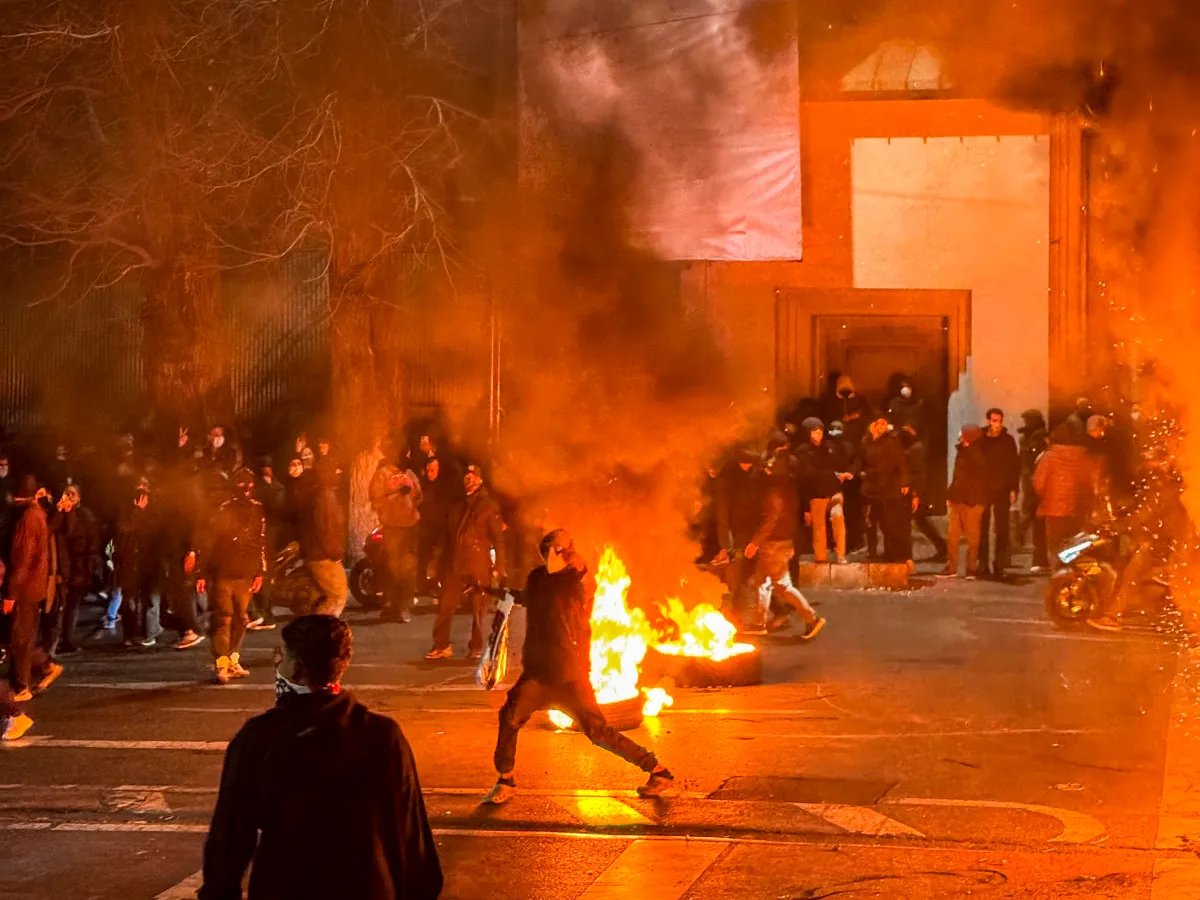
As of Thursday, 92 million Iranians have been completely blocked from accessing the internet for more than a week, in what is now one of the longest nationwide internet shutdowns on record, according to experts.
Last Thursday, Iran’s leadership blocked internet and phone access across the country in response to massive anti-government protests that began late last year and have prompted a brutal and deadly crackdown by authorities.
As of this writing, Iranians have been unable to access the Internet for more than 170 hours. The previous longest shutdowns in the country lasted about 163 hours in 2019 and 160 hours in 2025, according to Isik Mater, director of research at NetBlocks, a web monitoring firm that tracks internet disruptions.
Mater said the current shutdown in Iran is the third-longest on record, after the internet shutdown in Sudan in mid-2021 that lasted about 35 days, followed by the outage in Mauritania in July 2024, which lasted 22 days.
“Iran’s shutdowns remain among the most extensive and tightly enforced nationwide blackouts we’ve observed, particularly in terms of the population affected,” Mater told TechCrunch.
The exact ranking depends on how each organization measures a shutdown.
Zach Rosson, a researcher who studies internet disruptions at the digital rights nonprofit Access Now, told TechCrunch that according to its data, the ongoing shutdown in Iran is on track to crack the 10 longest shutdowns in history.
Techcrunch event
San Francisco
|
13.-15. October 2026
Iran’s government has a long history of shutting down access to the Internet during times of protests and civil unrest, often making it more difficult to monitor the protests from outside the country.
A US-based human rights group estimates that there have been more than 600 protests in cities across Iran, and by one estimate the Iranian government’s violent crackdown has led to the deaths of at least 2,000 people.
The shutdown in Iran on January 8 was sudden, cutting government institutions such as the Ministry of Foreign Affairs from the Internet. Since then, some government departments and some parts of the economy, such as bank transfers and payment processors at gas stations, have had their access restored, The Financial Times reported this week.
According to The Guardian, a relatively small but unknown number of Iranians have been using Starlink terminals smuggled into the country to connect to the Internet. In 2022, the Biden administration carved out a waiver from US government sanctions against Iran to “increase support for internet freedom” and allow US technology companies to provide connectivity to Iranians for free, paving the way for Starlink to operate in Iran.
Authorities have since cracked down on Starlink users by making it illegal to own a Starlink terminal, jamming entire neighborhoods and confiscating the devices.
This week, President Donald Trump threatened military intervention if Iranian forces continue to use violence while reducing staff at a military base in neighboring Qatar, amid concerns of a possible retaliatory strike. The US military also diverted a naval strike group from the South China Sea to the Middle East.
On Wednesday, however, Trump said he had information that “the killing has stopped and the executions will not take place,” but admitted, “who knows?”
Meanwhile, the United Kingdom closed its embassy in Iran’s capital Tehran and evacuated its staff. Iran temporarily closed its airspace on Wednesday.