

Social community platform Discord is preparing to require users to verify their age by the second half of 2026, and users are concerned about the privacy of uploading a government ID or facial scan to the network. While users can still access most features without verification, many are still uneasy about providing more information to a company that suffered a breach last year that exposed the identities of around 70,000 users.
For some users, this is motivation enough to seek out alternative platforms that prioritize security, privacy or simply offer a different experience. Here’s a look at the most promising Discord alternatives, from open source and secure options to voice-first platforms built for hardcore gamers.
Stoat
Stoat (formerly Revolt) stands out as the closest Discord alternative in both design and ease of use. As an open source project, it gives users more control over their data and appeals to those who value privacy and transparency. Overall, the platform is fairly easy for Discord users to pick up, offering similar text and voice channels as well as community servers.
However, Stoat is a relatively new platform (launched in 2021), and still has growing pains. Recently, it experienced server capacity issues and occasional lag during user surges. Feature support isn’t yet on par with Discords, and onboarding can be slow at times, especially as the platform’s popularity increases. For those willing to trade a little stability for increased privacy, however, Stoat could be worth a try.
Element
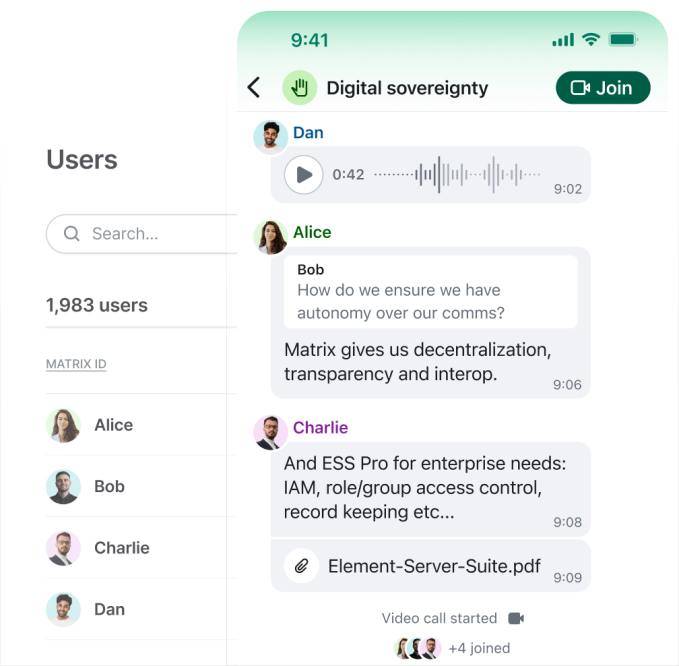
For users who prioritize privacy and control above all else, Element offers a compelling alternative. Built on the decentralized Matrix protocol, Element enables users to self-host servers, maintain end-to-end encryption, and interface with other Matrix-based services. This ensures that no single company controls your data.
While the setup and interface require a bit more tech savvy than Discord’s, Element is a good choice for users who value secure, decentralized communication.
TeamSpeak
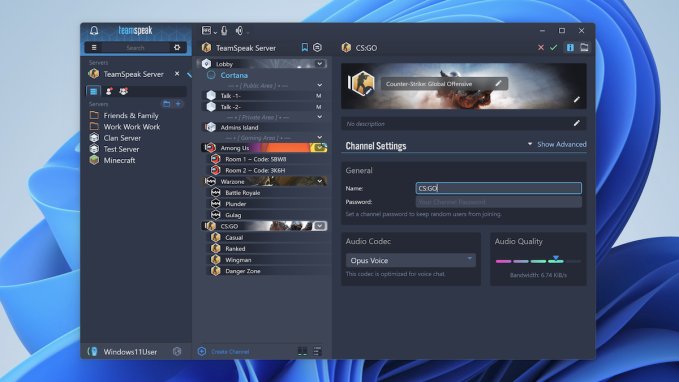
If your primary need is high-quality, low-latency voice chat, TeamSpeak is the best alternative to Discord. While it remains popular among competitive gamers for its superior audio and private server hosting, its text chat and media sharing are pretty basic. It also lacks built-in video calling as well as emojis and gifs. So if you don’t mind not having as many features, it’s great for voice-centric groups that don’t need all the bells and whistles.
Techcrunch event
San Francisco, CA
|
13.-15. October 2026
Similar to Stoat, TeamSpeak has seen an increase in new users, prompting the platform to expand its hosting capacity. In February, TeamSpeak introduced two new regions for creating communities: “Frankfurt 3” and “Toronto 1.”
Mumble
Mumble is a free open source voice chat application. Like TeamSpeak, it provides high-quality audio with low latency and allows users to host and customize their own servers. However, its interface is outdated and lacks some of the features found in Discord, making it more ideal for hardcore gamers who focus on voice chat rather than community building through video calling, media sharing, or screen sharing.
Discourse
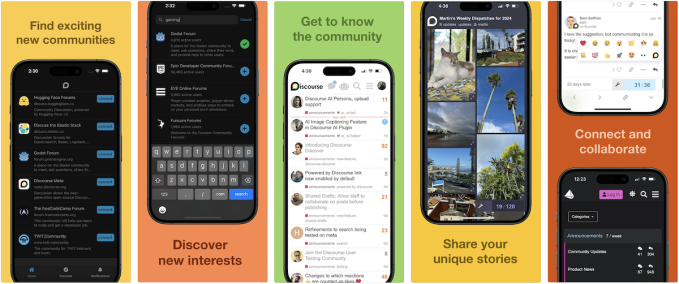
Those who prefer long-form, organized discussions to quick chat may find Discourse more appealing. As an open source forum platform, Discourse supports threaded discussions, making it ideal for educational groups, professional teams, and communities that value in-depth conversation. However, users looking for instant messaging, voice, and casual group chats may find it less familiar than Discord.
Slack, Microsoft Teams, Signal or WhatsApp
Other notable mentions include Slack and Microsoft Teams, which work well for professional and productivity-focused communication. Signal is also a top choice for those who want end-to-end encryption and privacy. Meanwhile, WhatsApp also offers free messaging and group calling, though it’s not designed for gaming or large communities.
What to know about age verification on Discord
Discord recently announced that it will soon implement age verification measures with the aim of creating a safer environment, especially for its younger users. This initiative is designed to ensure that users meet the necessary age requirements to access certain features and communities on the Platform. Users may be asked to verify their age using various methods, which may involve submitting an ID, completing a facial age assessment, or using a credit card.
By default, all users will experience a “teen-appropriate” setting, and only those who are verified as adults will be able to change certain settings or access age-restricted content. Adults must verify their status to unmask sensitive content and access channels and servers intended for older audiences.
After a recent setback, Discord postponed the official launch to the latter half of 2026, adding that 90% of users will not require age verification and can continue to use the platform without changes, as many users do not engage with age-restricted content. The platform initially planned to roll out age verification in March.