

It was notable, as Jude Bellingham threw his arms in the air in frustration at being substituted, that two other England players in particular made an effort to come over and congratulate him as he left the field: Phil Foden and Harry Kane.
The two players that Thomas Tuchel had said a few days earlier could not be on the field at the same time as the Real Madrid star because they do not complement each other.
Portrayed by some as a loner, a self-absorbed and off-the-ball non-team player, Bellingham was there in front of millions and received the solidarity and public support of the England captain and Manchester City striker.
Bellingham is a world-renowned superstar. He is the national team’s poster boy.
When the England team boarded the team bus last night, ahead of their flight out of Tirana International airport, it was Bellingham who was mobbed by Albanian fans, Albanian security guards, Albanian journalists – all wanting selfies with him.
He was committed to each one, moreover was polite and accommodating because this scrutiny is part of his everyday life.
Kane, England’s all-time leading goalscorer, who now has an extraordinary 28 goals in 23 games this season and has surpassed Pele’s international goal tally – even he doesn’t get half the attention that Bellingham does.
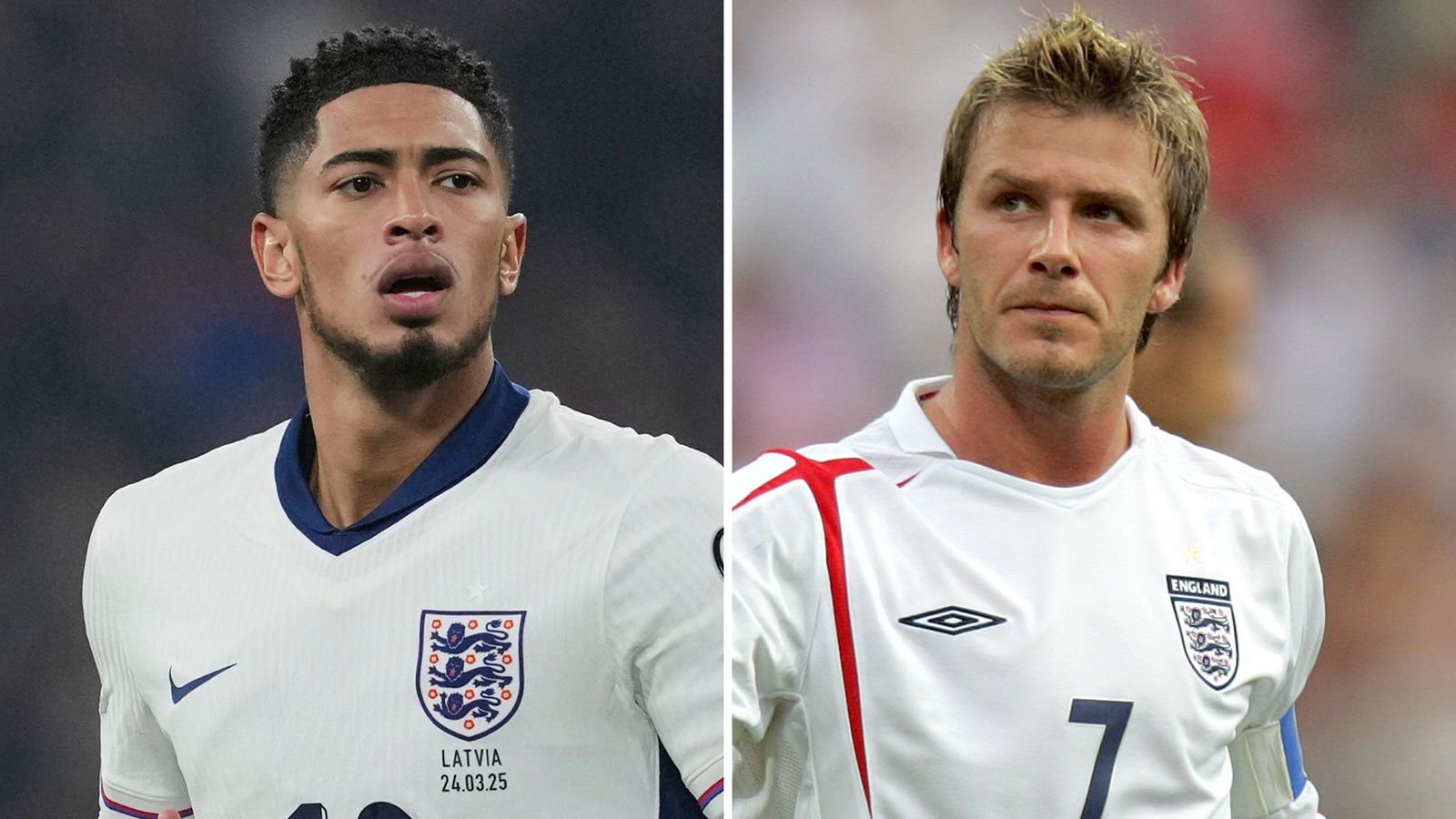
So it is in that context that we must judge the man (the 22-year-old man) and his behaviour. He is the David Beckham, the Wayne Rooney, the Paul Gascoigne of past eras – the icon and the tormentor, the hero and the villain, the celebrity to be mocked or placed on a pedestal as the whims of the nation and the media dictate.
What actually happened when Bellingham was rejected
The TV pictures did not capture the reality of the situation last night when Bellingham was substituted in the 84th minute. So let me paint the true picture for you, as seen from the media stand.
Bellingham had just splashed out a brilliant 40-yard pass to Marcus Rashford on the left, who delivered an equally sumptuous cross onto the forehead of Kane, who nodded in his and England’s second goal to all but guarantee victory and England’s perfect qualifying record of eight wins from eight.
Bellingham immediately ran over to high-five Rashford before turning to celebrate with Kane and the rest of the team.
Immediately after that, he saw his close friend Morgan Rogers stripped and ready on the sideline, and Bellingham knew his time was up. It was at that moment that he threw his arms in the air.
To me it was a clear show of frustration rather than disagreement. After being recognized by some of his teammates, he trotted off the pitch and shook hands with Tuchel, who grabbed him and slapped him on the back in a friendly show of appreciation.
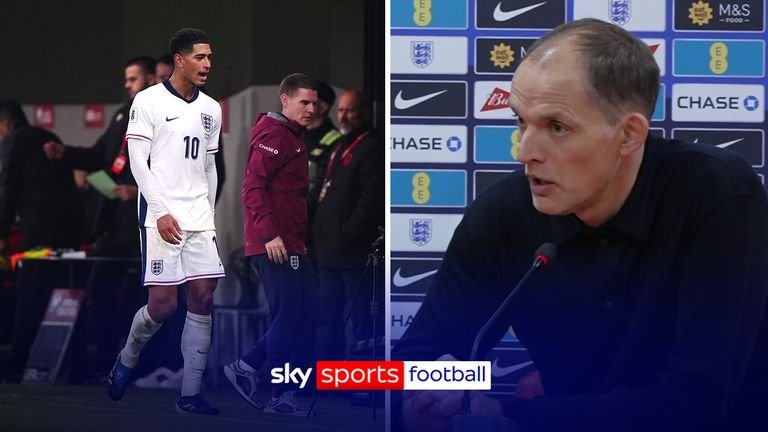
England manager Thomas Tuchel says Jude Bellingham ‘has to accept’ the decision to be substituted after the midfielder was seen frustrated by the call.
The first Tuchel knew about the arm wave was when he was asked about it in the post-match press conference and he said he would review it.
“Behavior is key,” the coach said, “and respect for teammates who come on the field. Decisions are made and you have to accept it as a player.” It is absolutely correct and the least that the head coach demands.
In a week when Tuchel has laid more emphasis than any England manager before him on the importance of substitutions and the necessity of “the squad”, the last thing he needed was England’s highest-profile player to display a public display of petulance and self-interest.
But if Bellingham had been substituted a few minutes later, and not immediately after he had finished celebrating a goal in which he had played a key role, the arms might have stayed at his side.
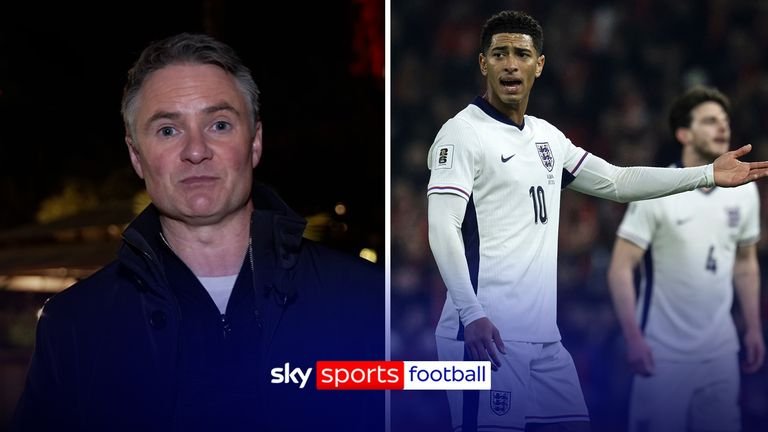
Sky Sports News’ Rob Dorsett reacts after England beat Albania to maintain their perfect record in World Cup qualifying.
Brand Bellingham, Brand Beckham and Team England
There will be many who will say that Bellingham has proven once again that he is not a team player, it is about him, that he does not respect Tuchel or his fellow players enough, that “brand Bellingham” is more important than Team England.
But there will be just as many people who say they would be more concerned if Bellingham was content to be taken off the pitch, and that his determination to succeed and run standards is a key element if England are to win next summer’s World Cup.
The similarities between Bellingham and Beckham are striking and how they are portrayed.
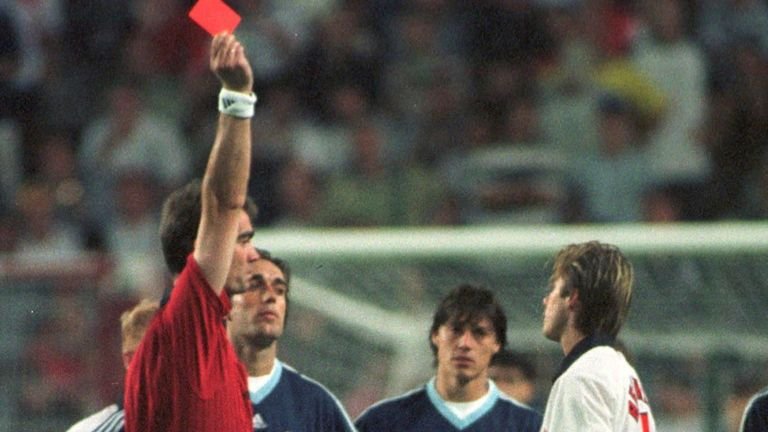
David Beckham was sent off against Argentina at the 1998 World Cup…
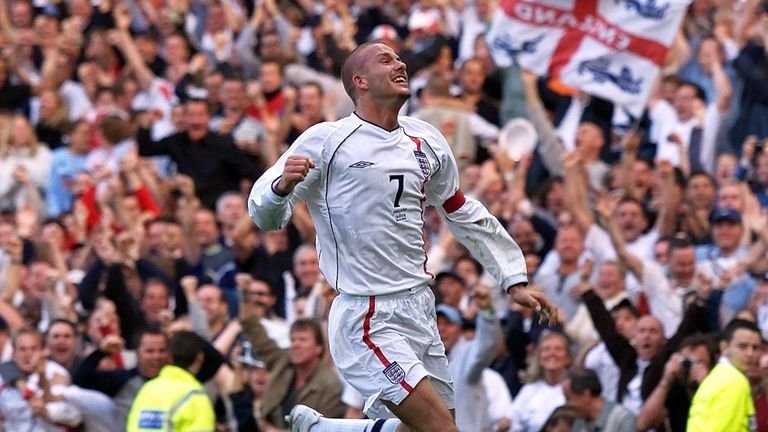
…but the mood changed when he scored a free-kick against Greece to help England qualify for the 2002 World Cup
Beckham was the nation’s villain in 1998 when he was sent off for kicking Argentina’s Diego Simeone in the last 16 of the World Cup. He had death threats. But a few years later he was the undoubted hero when he single-handedly dragged England to the final of the 2002 World Cup with a career-defining dominant performance, and to free kick against Greece.
Bellingham was praised to the max when he kept England at Euro 2024 with a mesmerizing overhead kick in stoppage time to level the scores against Slovakia. By contrast, his own national team coach said five months ago that his mother sometimes finds him “repulsive”. Hero and villain personified.
The Madrid maestro is sure to continue to divide opinion, and it’s just as certain that he’ll continue to dominate the headlines and social media between now and next summer’s football showpiece.
That there is more focus on Bellingham’s behavior than England’s incredible performance in winning eight out of eight in qualifying without conceding a single goal is criminal.
But such is the life of a football icon.