

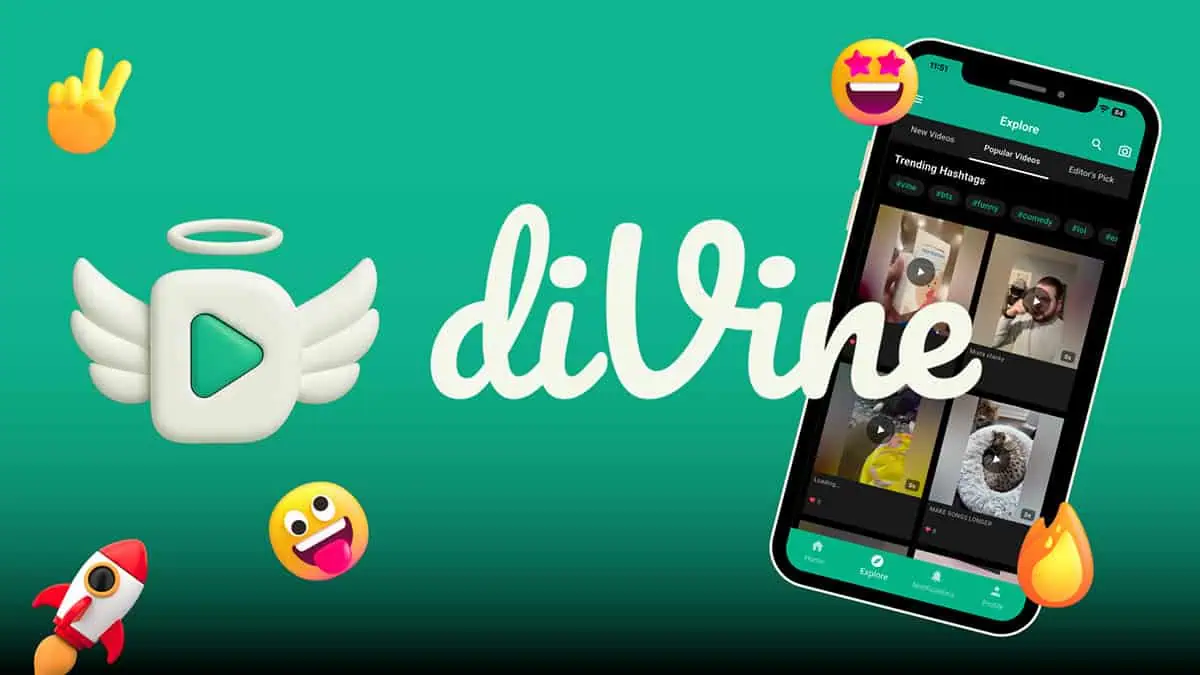
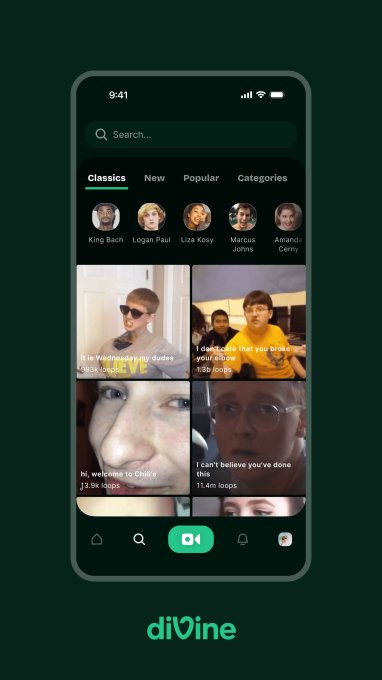
A new project to bring back Vine’s six-second looping videos is now available for download on the App Store and Google Play. Divine, as this Vine reboot is called, provides access to an archive of around 500,000 Vine videos, restored from a backup of the original service, and allows creators to repost new Vines.
Divine was funded by “and Other Stuff”, a nonprofit organization formed in May 2025 by Twitter co-founder Jack Dorsey. The non-profit is focused on funding experimental open source projects that have the potential to transform the social media landscape. Dorsey’s backing of Divine doesn’t make him a traditional investor, as he’s not looking to get a return here. Rather, his goal is to correct an earlier mistake he made as CEO of Twitter: shutting down Vine in the first place.
To create Divine, Evan Henshaw-Plath, an early Twitter employee and member of “and Other Stuff,” explored the Vine archive. Henshaw-Plath, who goes by “Rabble” online, explained that much of Vine’s content was originally supported by a community archiving project known as the Archive Team.
These videos had been stored as large, 40-50GB binary files, requiring Rabble to write big data scripts to figure out how the files worked and how to reconstruct them, along with the user engagement, such as views, likes and comments, associated with the original videos.
Not all data was able to be recovered, but progress has been made. The app initially launched to testers last November with about 100,000 of Vine’s top videos, then grew to about 300,000 videos just before today’s launch, Rabble told TechCrunch. Now, the app hosts about 500,000 videos from nearly 100,000 original Vine creators as it goes public for the first time.
The effort has attracted the attention of several early Vine creators, including Lele Pons, JimmyHere, MightyDuck, and Jack and Jack, among others. (Divine user profiles can be viewed on the web even if you don’t have the Divine mobile app.)
Rabble said the original plan was to quickly push the app out after some initial testing, but early Viners encouraged the team to persevere.
Techcrunch event
San Francisco, CA
|
13.-15. October 2026
“It was actually the wines that were like ‘no, no – this is far more important than just nostalgia,'” he explains. Users said they wanted something like Vine that would reset social media and filter out AI slop. “They were the ones who told us to wait and get it right. And that’s what we did.”
The team rolled up their sleeves, revisited and rewrote the code in parts, and focused on the app’s design.
The version of Divine that launches today is a result of those efforts and includes features like compilation mode, which reflects how much of today’s youngest generation grew up watching Vines. With this mode, people can create their own lists of videos to make their own compilations.
To use compilations, you can visit a hashtag like #cats and it will automatically play a stream of matching Vine videos. You can pause the stream to interact with the content, like reposting or liking the videos, or you can just sit back and watch.
Another key aspect of Divine’s value proposition is its lack of AI-generated content.
“I decided I wanted to filter out AI content because I personally don’t like seeing AI content. I don’t like feeling tricked,” Rabble says. “I don’t like the idea that tons of content can be made very quickly and with little humanity or thought.”
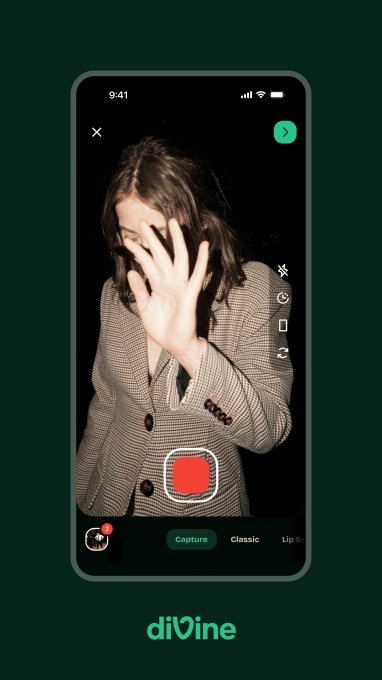
To keep the network free of this unwanted content, or “AI slop” as it’s often called, DiVine requires users to either record videos directly in the app or verify how uploaded videos were created using C2PA, an open industry standard that establishes the origin and edits for digital content.
In addition to offering the experience of bringing back Vine, the app’s other mission is to popularize open protocols — something that delivers on Rabble’s vision of reclaiming social media from the tech giants. Divine itself is built on the open social protocol Nostr, and the team is experimenting with integrating the open source AT protocol that powers Bluesky. In the future, Divine may also integrate with the ActivityPub protocol, which supports alternative social networks such as Mastodon and Flipboard, and which is built into Meta’s Threads.
Divine has no revenue model and is structured as a public purpose company. But Rabble believes it could allow digital creators to take back some control over their online presence, which they could monetize via brand deals or collaborations, as they currently do. He also likes the Patreon model of supporting creators directly and the idea of a Pro account that would provide additional features.
“Many of us came from Vine and that was the beginning of everything,” OG Viner Lele Pons said of the app’s relaunch. “An iconic app. It was such a key moment in my own personal journey and in internet culture, it makes me so happy to see these early classics brought back to life and to have the chance to make new ones.”
Divine is available as a free download on the App Store, Google Play and the Nostr-powered Zapstore. Initially, it will roll out access to those on the waiting list and will let others in gradually using invitation codes.
When you buy through links in our articles, we may earn a small commission. This does not affect our editorial independence.