

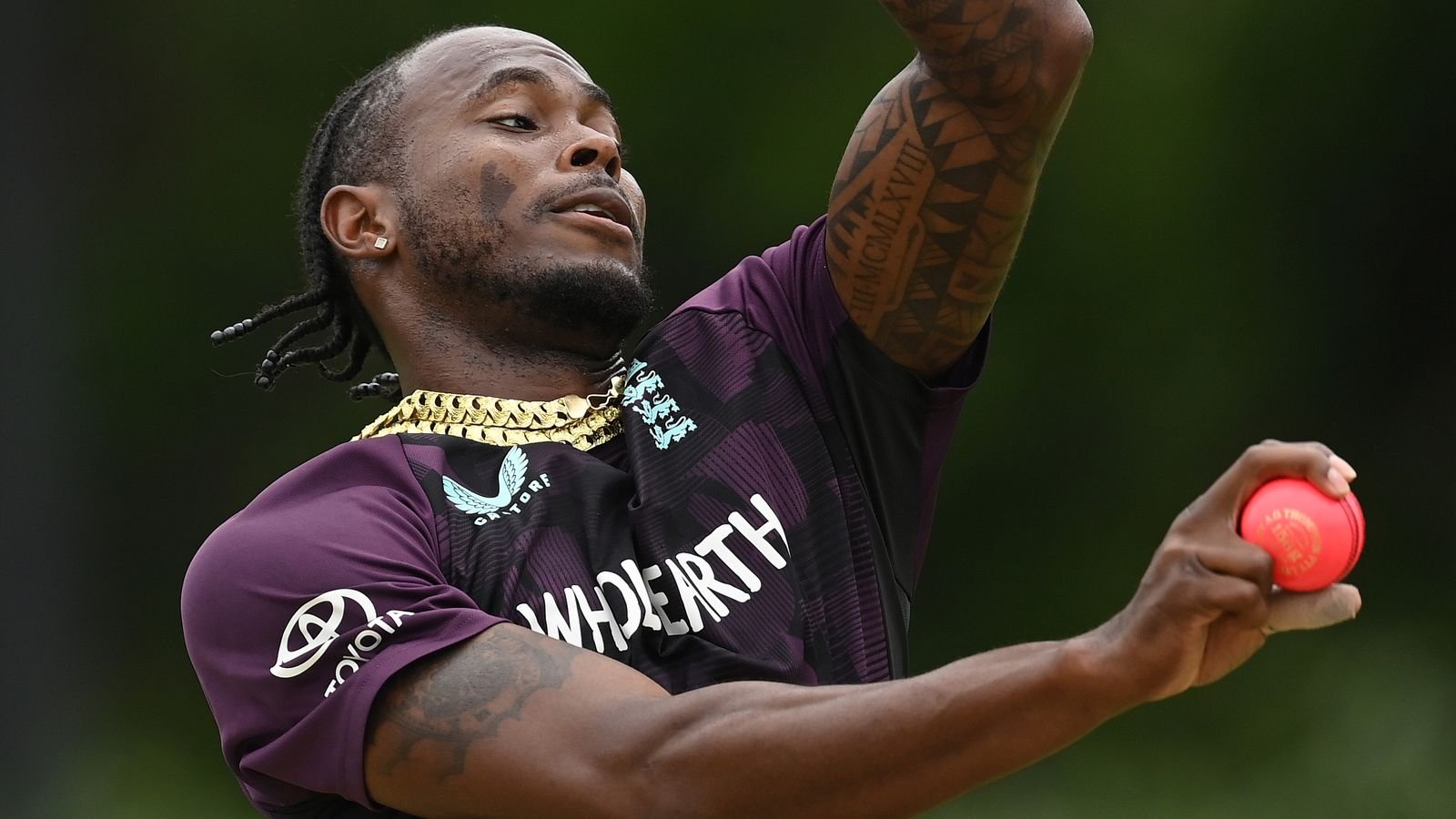
The ball will be different for the second Ashes Test and England will hope the result is too.
After succumbing to the Red Kookaburra in Perth in the series opener, Ben Stokes’ side now face Australia in a pink-ball match at The Gabba in Brisbane from Thursday.
Ahead of the clash, which kicks off at 04.00 UK time, we look at the key questions surrounding the day-night Tests and why the stats suggest England will have their work cut out for them…
What is the meaning of day-night test cricket?
The idea is, or was, to attract larger audiences to the longest form of the game, primarily in places where numbers have fallen.
Whether a Test in an Ashes – hardly a series lacking in gravitas – needs a pink-ball game is fair to debate, with England’s Joe Root saying it doesn’t.
Sky Sports’ Michael Atherton isn’t a fan either, although he accepts that day-night has become an important part of Australia’s summers.
This match adds another dollop of intrigue to an already headline-grabbing contest and is a game England could really do with winning after their implosion in Perth left them 1-0 up in the five-match series.

Sky Sports’ Michael Atherton says England must bounce back in the second Ashes Test or the series is all but over
How have England fared in pink-ball tests?
Not great.
They won their first (beating West Indies by an innings and 209 runs at Edgbaston in August 2017 after taking 19 wickets on day three) and their latest (beating New Zealand by 267 runs at Tauranga in February 2023), but in between those thumping victories they suffered five straight defeats, including three against Australia.
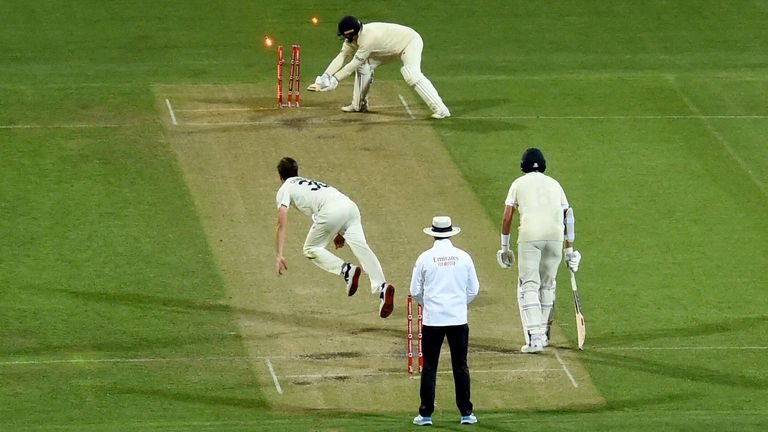
Ollie Robinson was bowled by Pat Cummins in the final Ashes Test of the 2021/22 series in Hobart as the hosts secured a 4-0 series win
England were hammered in Adelaide in 2017 and 2021, while in their last match in the previous Ashes away series four years ago they went down by 146 runs in Hobart – defeat sealed when Ollie Robinson was bowled by Pat Cummins, who had backed so far to the leg side that he was barely on the cutting edge.
England’s other two pink-ball pummelings came against India in Ahmedabad in February 2021 (picking a seam-heavy attack and losing 19 wickets to lose in two days) and against New Zealand in Auckland in March 2018, when an innings thrashing included being bundled out for 58 in their first dig. At one point they were 27-9.
What about Australia today-nights?
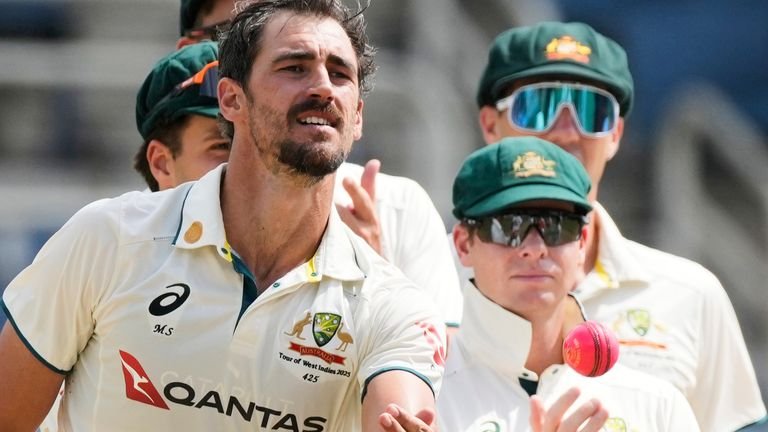
Australis bowled West Indies for 27 in their last day-night Test in Jamaica in July
These guys are pink wizards. Australia have won 13 of their 14 day-night Tests, with the only blemish at home against the West Indies in January 2024 when they were humiliated by Shamar Joseph. The fact that the Aussie defeat came at The Gabba – where this Ashes pink-ball is being played – could give England some comfort.
But with Australia far more experienced in this format and England not having played a pink-ball Test for three years, home player Marnus Labuschagne feels his side probably have the advantage.
Labuschagne, who averages 63.86 tonight, said: “It’s become something that Australia have been very good at. We’ve learned over time the different moments of the game and how to play them. Hopefully that can be an advantage for us in this game.”
How do conditions affect cricket?

Atherton and fellow Sky Sports pundit Nasser Hussain discuss what key differences there will be with the pink ball
Passages of pink-ball Tests can be bowler-dominated, with the ball often zipping around under lights and during the twilight period (when floodlights take over from natural light).
With this game in Brisbane starting at 14:00 local time, the sun will set in the second session, giving a pretty much half and half split between day and night.
“Win the toss and bat” is former England seaman Stuart Broad’s advice, allowing for the best conditions before the bowlers later take over, with Sky Sports pundit Michael Atherton says he wouldn’t be surprised if pinch hitters were used in strong batting conditions.
Opening for Australia in their second innings in Perth, Travis Head hit a 69-ball hundred – the second-fastest in Ashes history – before finishing with 123 from 83 deliveries, an innings that featured 16 fours and four sixes.
Australia must be tempted to stick the Head up top again, especially in a game where quick runs can be crucial.
Which players have featured in pink-ball tests?
Australia’s Mitchell Starc has taken a leading 81 wickets in day-night matches
Australia’s left-arm fast Mitchell Starc is the kingpin when it comes to pink-ball Tests with 81 wickets in 14 matches at an average of 17.08, including 6-9 in 7.3 overs in his previous day-night outing in the Caribbean in July when West Indies were torpedoed for 27.
Labuschagne said of Starc: “Is he the best pink-ball bowler in the world? I think that’s probably what the stats say. I think it’s a combination of being a left-hander, swinging it at high pace and swinging it late that makes him so dangerous. Combine that with the pink ball, which swings later and more inconsistently to line-up, and that’s it.”
Australian off-spinner Nathan Lyon has the joint second-most wickets in pink-ball Tests – his 43 scalps matched by the still-absent Pat Cummins – so will that stat convince England to play a spinner after opting for a frontline attack in Perth?
Shoaib Bashir or all-rounder Will Jacks are the slow-bowling options and Jacks’ selection would also strengthen the lower-order batting.
The leading run scorer in pink-ball Tests is Labuschagne with 958 in nine matches, including four hundreds and four fifties. Team-mate Steve Smith has 815 in 13 games, while Head is fourth on the list with 719 in 10, behind the now-retired David Warner (753 in nine). Root is England’s highest pink-ball run scorer (501 in seven matches).
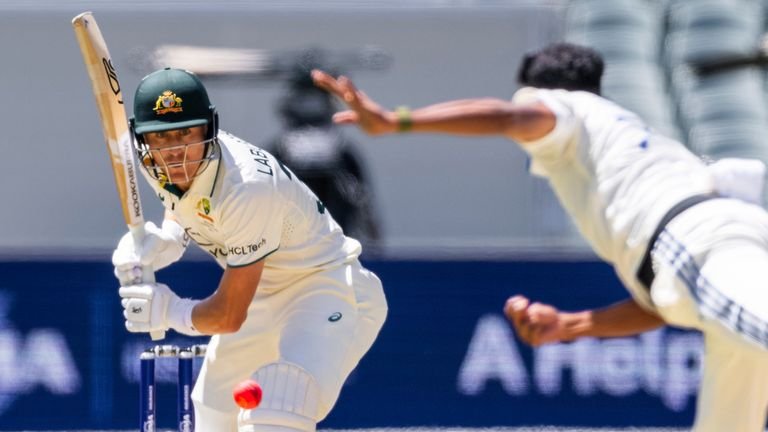
Marnus Labuschagne has scored over 900 runs in day-night Tests
Has lunch been eaten? How about tea?
The structure of the sessions remains the same as a normal test match with a 40-minute interval after the first two hours and then a 20-minute break after another two hours. The only difference is that instead of lunch and tea, the breaks will be dinner and tea.
Finally, what has Steve Smith been wearing under his eyes?
Ah, you’ve noticed the ‘black eyes’.
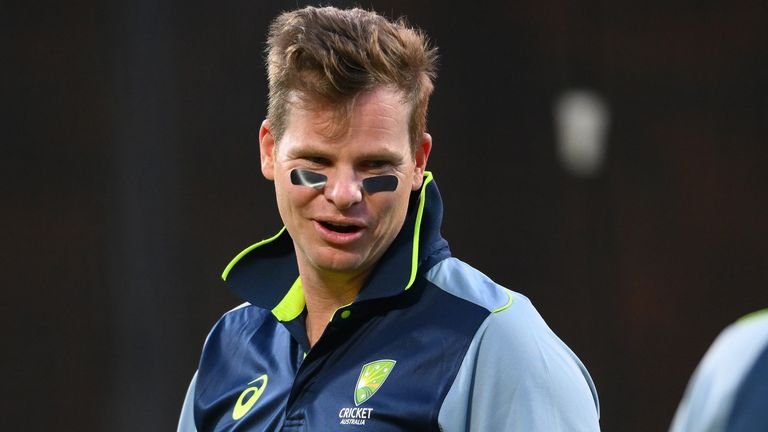
Australia’s Steve Smith has been wearing eye blacks for training ahead of the pink-ball Ashes Test
These strips, which Smith has been hitting with in the nets prior to this game, are designed to reduce glare.
Former West Indies batsman Shivnarine Chanderpaul wore them regularly during his playing days, while Smith has tried them on before potentially batting under lights in Brisbane.
Speaking to the media, Labuschagne said of Smith trying on the ‘eye blacks’: “There has to be some sort of science or theory to it.
“I look at it both ways: whether there’s science behind it or whether it’s placebo. If it feels like it works, either way, it works.
“I would love nothing more than to see him strolling out with the Shivnarines and slamming them all over the place.”
Ashes series in Australia 2025-26
All times Great Britain and Ireland
- First Test (Perth – November 21-25): Australia beat England by eight wickets
- Second test (day/night): Thursday 4 December – Monday 8 December (4am) – The Gabba, Brisbane
- Third test: Wednesday December 17 – Sunday December 21 (11.30pm) – Adelaide Oval
- Fourth test: Thursday 25 December – Monday 29 December (11.30pm) – Melbourne Cricket Ground
- Fifth test: Sunday 4th January – Thursday 8th January (11.30pm) – Sydney Cricket Ground