

The oceans – to state the obvious – are big. This makes it difficult for governments, shipping companies and insurance companies to know exactly what is happening on them at any given time. It doesn’t help that these modern ships are often not equipped with modern technology or the right software behind these sensors to properly analyze what they see.
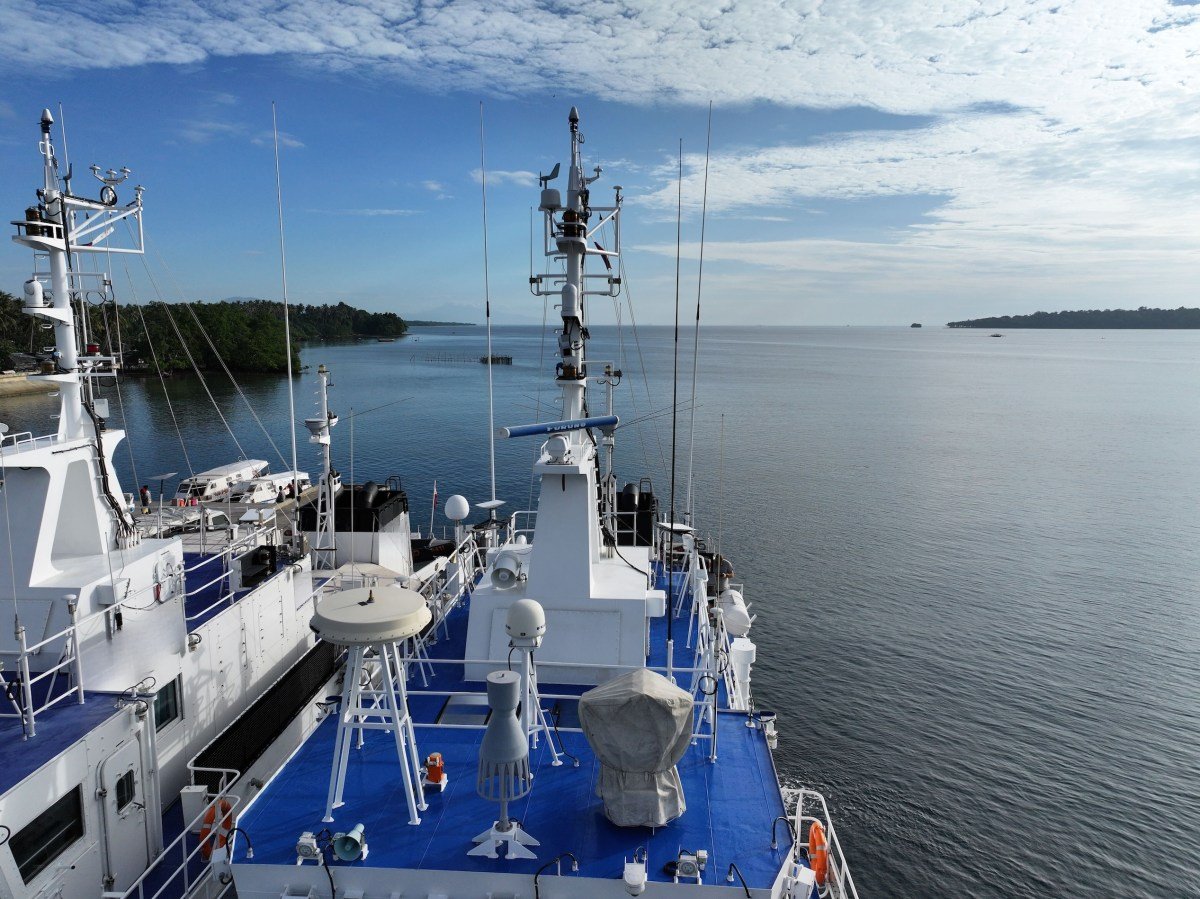
Quartermaster, an Arlington, Virginia-based startup, is building a solution to this problem that it calls “SmartMast.” It’s literally a package of weather-hardened sensors like cameras and radios that go on a ship’s mast and can relay maritime data in real time. Combined with an analytics platform that can interpret all that information, Quartermaster refers to it as a “continuous, distributed sensing network” — a hive mind for millions of ships.
SmartMast is far more advanced than the current standard known as AIS, or the “automatic identification system,” according to Quartermaster CEO and founder Neil Sobin. AIS is very basic and more or less consists of relayed location pings. It is also vulnerable. Sobin says Quartermaster’s technology will be less susceptible to fraud, which can be a major problem on the high seas.
“In maritime, AIS is a completely broken system. It’s opt-in, [you] enter your own data, and if you want to do something malicious at sea, from petty smuggling all the way up to sanctions evasion, you can simply opt out of the system or fake it,” he said in an exclusive interview with TechCrunch. “You can take advantage of how fragile it is.”
Sobin has spent recent weeks repeating that pitch to investors, and they rewarded him with a $43 million Series A funding round. The investment, which Quartermaster announced Wednesday, was led by First Round Capital and Quiet Capital, a VC firm that backs “remarkable founders from day zero.”
First round partner Bill Trenchard, who led Uber’s seed round in 2010 and is an investor in Flexport, said in a statement that Quartermaster is “reshaping how maritime operators understand and transact on the world’s oceans.”
“Most attempts to bring intelligence to the ocean have run into the same wall: the cost of custom hardware doesn’t scale to a planet that’s mostly water. Neil and his team have solved that,” he said.
Quartermaster says more than 600 ships using SmartMast have covered 10 million square kilometers of sea to date. The primary goal is to create an infrastructure layer for intelligence applications – identifying other ships, collecting training data for companies working on maritime autonomy, assisting researchers and robotics experts, and providing data and insights to governments.
In Sobin’s eyes, there are almost no limits to how Quartermaster’s system can be used, and the company is already finding new uses for the technology. For example, the company said that SmartMast-equipped ships have already assisted in “over 20 rescues of seafarers at sea.” It’s not a revenue-driving opportunity, but Sobin said Quartermaster is constantly thinking of ways to make life better for sailors, especially because it can win more customers.
“It is work we are really proud of, but also [those are] the dynamic that helps us lock in our network, you know, and create that incentive for sailors to work with us in this way,” he said. “Our approach is to be pro-Marine and to create incentives for sailors, and I think very few others will figure out how to run this model as successfully as we have. I think there’s a bunch of players in the market trying to sell a sensor to a boat, trying to sell a sensor to a fleet operator, and I think those are really challenging pitches to make because fleet operations are low-margin businesses.”
As for the funding, Sobin said he expects a large portion of it will be used to hire engineers to keep pushing Quartermaster’s technology forward. While that money will help, Sobin also believes the opportunity will be just too good for some engineers to pass up.
“The ocean has so much low-hanging fruit in computer vision tasks,” he said. For engineers at social media companies or AI labs, it’s “hard to feel the reward for all your efforts. At sea, a single engineer can come in and make a significant impact in relatively short periods of time, simply because no one has worked in space before.”
When you buy through links in our articles, we may earn a small commission. This does not affect our editorial independence.