


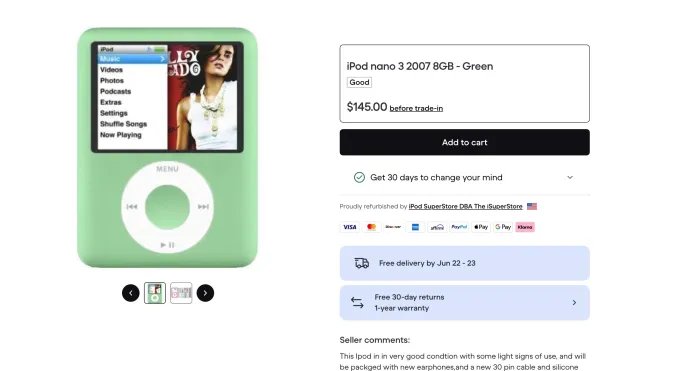
When Tony Fadell walked into New York City’s 28th Street Subway Station, he didn’t expect to come face to face with an advertisement for a product he designed over 20 years ago. But there it was: a five-by-four-foot poster promoting the iPod Shuffle, luring passersby with the promise of “Zero screen time.”
“The first thing I thought was, ‘Wait a minute, didn’t somebody change the ad?'” Fadell, known as the father of the iPod, told TechCrunch. “For someone like me who knows that stuff intimately, it’s like seeing your child’s picture.”
As Fadell stood at the train station, he was surrounded by people wearing wireless Bluetooth headphones to stream music to their phones, effortlessly accessing music libraries of over 100 million songs. This technology, which we take for granted, makes Steve Jobs’ early iPod slogan – “a thousand songs in your pocket” – sound antiquated.
The postage-stamp-sized iPod Shuffle, which relied heavily on shuffle playback and offered little control compared to today’s streaming apps, should not appeal to a modern audience. But we have become so entrenched in technology that our various devices, apps and algorithms mediate all our experiences, from grocery shopping to dating. We’ve built smartphones that can do almost anything, but we’ve also created a constant connection that’s become more exhausting than enriching.
“People are very oversaturated and overstimulated, and they really want a more mindful approach to what they’re doing with their technology,” Joy Howard, CMO of Back Market, an online marketplace for refurbished tech, told TechCrunch. “There’s this fatigue that we have with the need to optimize every single aspect of our lives.”
Howard and her team were responsible for the iPod Shuffle ad that Fadell was so shocked to come across. But Howard says demand is growing for this supposedly antiquated technology — if these devices weren’t driving sales, the company wouldn’t have shot for prime ad placement in a busy New York City subway station.
For younger generations who have never known a world without social media and smartphones, there is a certain magic to wired headphones, retro game consoles, CDs and digital point-and-shoot cameras. They crave experiences that don’t try to monopolize their attention. Old-fashioned cameras can’t upload photos to your Instagram story, retro games don’t spam you with gambling ads, and iPods can’t automatically play music that you’re algorithmically destined to enjoy. That’s the whole point of this movement, which Howard calls “slowtech.”
“The ‘fast technology’ until now has been about eliminating friction… [Now]people see friction as a way to create boundaries for themselves,” Howard said. “It’s so amazing to me that people now want to bring friction back into their lives and see it as a quality rather than a flaw.”
Around the same time that Fadell first pitched the iPod to Steve Jobs, Austin Murray founded JAMDAT, one of the first mobile gaming companies, which quickly went public and was sold to Electronic Arts for $680 million.
“When we pitched our company back in 2000, 2001, people laughed at us and said, ‘Why would anyone want to play games on their cell phone?'” Murray told TechCrunch.
Now, investors are just as incredulous when he pitches them on his screen time reduction app, MOQA, which he’s building to counter the very phenomenon he helped create.
“It’s seeing what happened to my children and the people around me that hurts my soul the most,” Murray said. “When everybody’s doing the same thing—meaning everybody, the average screen time is like five hours probably on a phone every day—it’s not a willpower problem. It’s a product design problem.”
This desire to cut back on the time we spend using our phones, computers, and TVs has become ubiquitous—about 53% of American adults say they want to reduce their screen time.
“At a certain point, I realized that the willpower was insufficient to not waste time on my phone,” said author Calvin Kasulke, whose novel “Several People Are Typing” depicts workers trapped inside a Slack workspace. He now pays for Opal and Freedom, two apps designed to limit his screen time and social media use. “I don’t need to limit my time on iMessage – these are people I really know! But I certainly don’t want to waste my time judging.”
“I want to be very clear… I don’t feel smug about this. It’s embarrassing to have two different apps restricting how I use this,” Kasulke said. “I don’t think screens are inherently bad. I just think like I used to [my phone] was worse and stupid, and now it’s a little bit less stupid.”
Others have given up on their iPhones altogether, opting instead for flip phones, e-ink devices running Android software, or minimalist touch-screen hardware like the Light Phone.
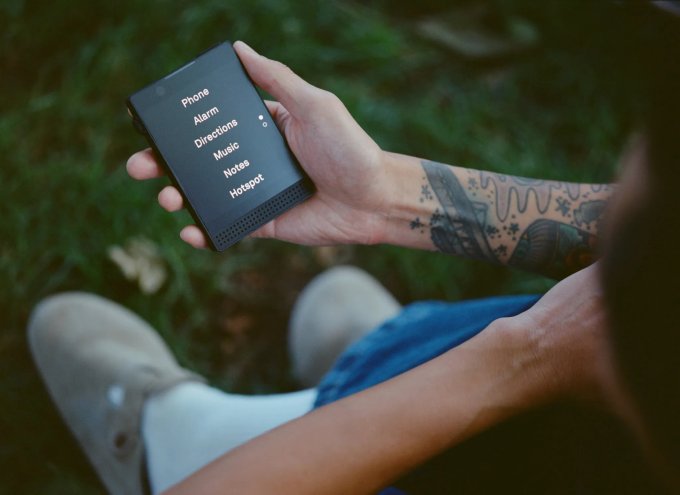
“Our customers for the past 10 years have told us how they feel more free after switching to Light Phone,” Light co-founder Kaiwei Tang told TechCrunch. “It’s getting more and more attention, especially among young people. We have quite a bit of society using the Light Phone as 20- to 35-year-olds, which surprised us.”
However, Murray is not so optimistic about the future of “dumb phones”.
“There’s definitely a movement of people who are just kind of anti-tech and ‘get it out of our lives,'” he said. “It’s really hard though, because then you realize you can’t do things that now require you to have a smartphone, like banking, or going into a hotel or [using] credit card.”
Kasulke said that if Apple ever made an e-ink iPhone, he would “f–ing donate plasma to afford it.” But that’s unlikely, so he’s not particularly interested in downgrading his phone.
“I’m not like, ‘I wish I could flush this thing down the toilet and live in the woods,'” Kasulke said. “My phone has some utility for my personal and professional life, but it also lives in your pocket, and it’s very, very easy and actually designed in some ways to be addictive and to waste time on it mindlessly.”
Screen time is not universally bad. We accumulate screen time when we video chat with our family, text our friends, read news articles, maintain our Duolingo streaks, or play Wordle. But as much as technology brings us closer together, it also pulls us out of the present.
“Obviously, people want the convenience of digital, but they don’t want the annoyance of always being connected,” Fadell said. “I’ve always been like, ‘We need fewer screens, not more of them.’ So having an Apple Watch with everything, like, no, no, no — I don’t want more, I want less.”

It’s not surprising that Fadell’s preferences are a bellwether for the market – he is, after all, a veteran product designer. US spending on fitness trackers grew 88% year-on-year, according to market research firm Circana, which credits screenless wearables like the Oura ring and the Whoop bracelet as key sales drivers. While these devices don’t have screens, you’ll need to use your smartphone to view your data, which would make it even more difficult for Oura and Whoop users to try something like the Light Phone.
But most consumers aren’t looking to make such an extreme change as flipping to a flip phone — instead, some are embracing even more sophisticated hardware that relies on their smartphone but cuts into their overall screen time.
Mark, a $159 AI bookmark, advertises itself as a tool to help users stop pulling out their phone to take notes while reading. While some readers may think the idea of an AI bookmark is symptomatic of the same problem pushing people toward a digital detox, Mark founder Eason Tang sees it differently.
“The way we’re trying to brand it now is this kind of analog tool, very culturally integrated with design, film, books and literature,” Tang told TechCrunch.
There’s undoubtedly something absurd about using an AI bookmark to convey your relationship with your phone, yet there’s some truth to Tang’s pitch — when you stop reading to take notes or snap a photo of a key passage on your phone, you’re bound to encounter another distracting notification interrupting your reading.
Although AI development is almost synonymous with “fast tech” culture, there is a clear attraction to the promise that AI agents can simplify our lives and give us more time away from screens.
“I think this idea that people want tools to serve them and not to dominate them is very profound,” Howard said. “I think what the ‘slowtech’ movement is about is people pushing back against the constant digital fatigue, distraction, overwhelm, so if you can use AI to do that, to protect yourself… That’s what people want: more control.”
The commonality of artificial intelligence turns some consumers away from the latest products, but this is not their only complaint about big technology. People are also disillusioned with these companies for constantly building perfectly good hardware just to get us to buy the latest model. Back Market, for example, rehabilitates discontinued laptops and resells them with USB keys that can install ChromeOS Flex, which turns supposedly outdated hardware into working Chromebooks.
“One of our developers started finding a way to hack things that had their OS sunset to bring it to new life. So one of the first things he hacked was a rice cooker,” Howard said. “His rice cooker was no longer supported! This is actually a really cool use of AI – like vibe coding your own app to keep your hardware alive longer.”
While slowtech proponents may not all agree on the use of artificial intelligence, the debate is secondary to the larger issue at stake: We’ve created an ecosystem where we’re so dependent on smartphones and our various apps that the whims of the tech industry can control how we cook rice. In this reality, it’s no wonder people are so eager to disconnect that they want to downgrade to an iPod Shuffle.
“People just really want to take back control of their time, their lives, their attention,” Howard said. “They’re down for anything that helps them do that.”
When you buy through links in our articles, we may earn a small commission. This does not affect our editorial independence.