
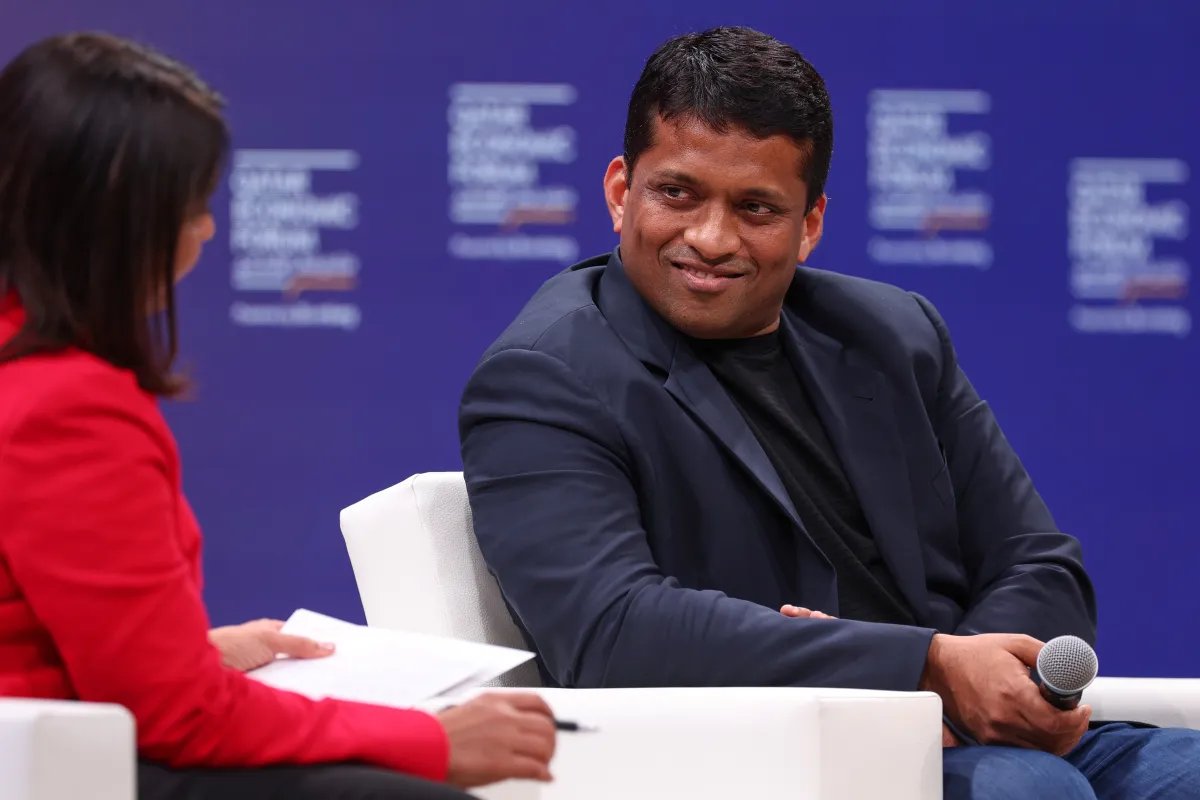
Byju Raveendran, the embattled founder of Indian ed-tech giant Byju’s, has blasted a US bankruptcy court order ordering him to pay more than $1.07 billion. He denies wrongdoing, accuses lenders of misleading the court and vows to appeal a ruling that marks a dramatic downfall for a one-time poster boy of India’s startup boom.
The Delaware bankruptcy judge issued the default judgment after finding that Raveendran had repeatedly ignored court orders and provided “evasive, incomplete” answers regarding about $533 million that Byju’s US unit allegedly transferred in 2022 and never returned. The judge also cited problems with a separate limited partnership stake that was later valued at about $540.6 million. The ruling, dated Nov. 20, stems from legal action by lenders seeking to recover funds tied to the $1.2 billion loan they made to the 2021 ed-tech startup.
Earlier this year, in April, a group of US lenders led by GLAS Trust sued Raveendran and his wife, Byju co-founder Divya Gokulnath, in Delaware bankruptcy court for the missing $533 million in loan proceeds. The pair denied wrongdoing at the time and accused lenders of attempting a hostile takeover of the business. They later said they planned to pursue a $2.5 billion lawsuit against the GLAS Trust and others in India and other jurisdictions, although no such filing has publicly surfaced. This was in addition to the complaint that Byju filed in the New York Supreme Court challenging the acceleration of the 2023 term loan.
The court’s latest ruling followed a Sept. 29 hearing on the default request, in which the judge cited a months-long pattern of noncompliance. The judge noted that Raveendran skipped hearings, exceeded extended deadlines and ignored a prior contempt order that imposed $10,000 in daily penalties that remain unpaid.
U.S. Bankruptcy Judge Brendan Shannon said the relief granted in the case was “extraordinary,” adding that “the circumstances of this case are frankly unique and unlike anything the undersigned has encountered before, making such relief … amply warranted.” The judge has given the parties seven days to respond to the order.
“We believe the US court erred in its judgment in this case and will file the necessary appeals and other objections related to this judgment and related orders,” J. Michael McNutt, senior litigation advisor at Lazareff Le Bars, which represents Raveendran, said in a prepared statement to TechCrunch. “The court, in our view, ignored relevant facts.”
Raveendran’s legal counsel argued that the court handed down the sentence without giving him an opportunity to present a defense and instead relied on a previous contempt order. The lawyer also argued that the ruling failed to recognize that GLAS Trust was aware that the Alpha loan funds were not being used for the personal benefit of Raveendran or other founders, but rather for Think & Learn, the startup’s parent company, the lawyer said.
Techcrunch event
San Francisco
|
13.-15. October 2026
The lawyer said Byju’s founders are preparing claims against the GLAS Trust and others in several jurisdictions that are expected to seek at least $2.5 billion in damages and, in the absence of a settlement, must be filed by the end of 2025.
Nevertheless, the default judgment marks a stunning fall for Raveendran and his eponymous company, once India’s most valuable startup with a valuation of $22 billion and backed by global investors including Tiger Global, the Chan Zuckerberg Initiative and Prosus. The company is now mired in lawsuits, funding droughts, layoffs and a battle for control as lenders and creditors scramble to recover what they can.
Raveendran previously challenged the Delaware court’s jurisdiction, but the judge rejected that argument in an earlier ruling, writing that “Raveendran’s conduct giving rise to the litigation here relates to his activities … in the United States raising money and serving as a director, officer, or manager of a U.S. corporation.”
Earlier this week, a Delaware bankruptcy filing claimed that most of the $533 million missing from Byju’s US unit, Alpha, was “rounded back to Byju Raveendran and partners.” In a reply, Raveendran denied the allegation and said the funds were not used for personal gain.
Meanwhile in India, Byju’s is undergoing a court-monitored sale process after insolvency proceedings began last year, with early bidders including Manipal Education and Medical Group (MEMG) and Ronnie Screwvala’s UpGrad.