

The way we use emoji has changed. In the early days, we were literal: You sent a nail polish emoji (💅) because you actually got your nails done.
Today, we lean on emoji to break down the barrier of our screens and inject a shrug, a wink, or the very specific “it’s fine, but it’s not actually fine” subtext. They are the language within the language that prevents a blunt message from accidentally killing the mood.
On World Emoji Day, here’s a closer look at the evolution of our emoji (all 3,977 characters) and how they can add physical and emotional depth to how we communicate in the modern era.
The term continues to evolve
We don’t just “laugh” anymore. We collapse, or internally scream. Modern internet culture has steadily moved from mild expression to drama, exaggeration and overwhelm.
For years, “face with tears of joy” (😂) was the undisputed emoji king, according to Gboard Federated Analytics. But after a decline for several years, it slipped down the charts in 2025.
Why? Because 😭 is a masterclass in modern vocabulary: It’s funny, it’s devastating, and it absolutely captivates. When we laugh, our propensity for exaggeration calls for it to be unleashed, pushing “rolling on the floor laughing” (🤣) to the top of the chart. Even our expression of heartbreak changes; data shows a poetic migration in popularity from the broken heart (💔) to the wilted flower (🥀).
Art informs innovation
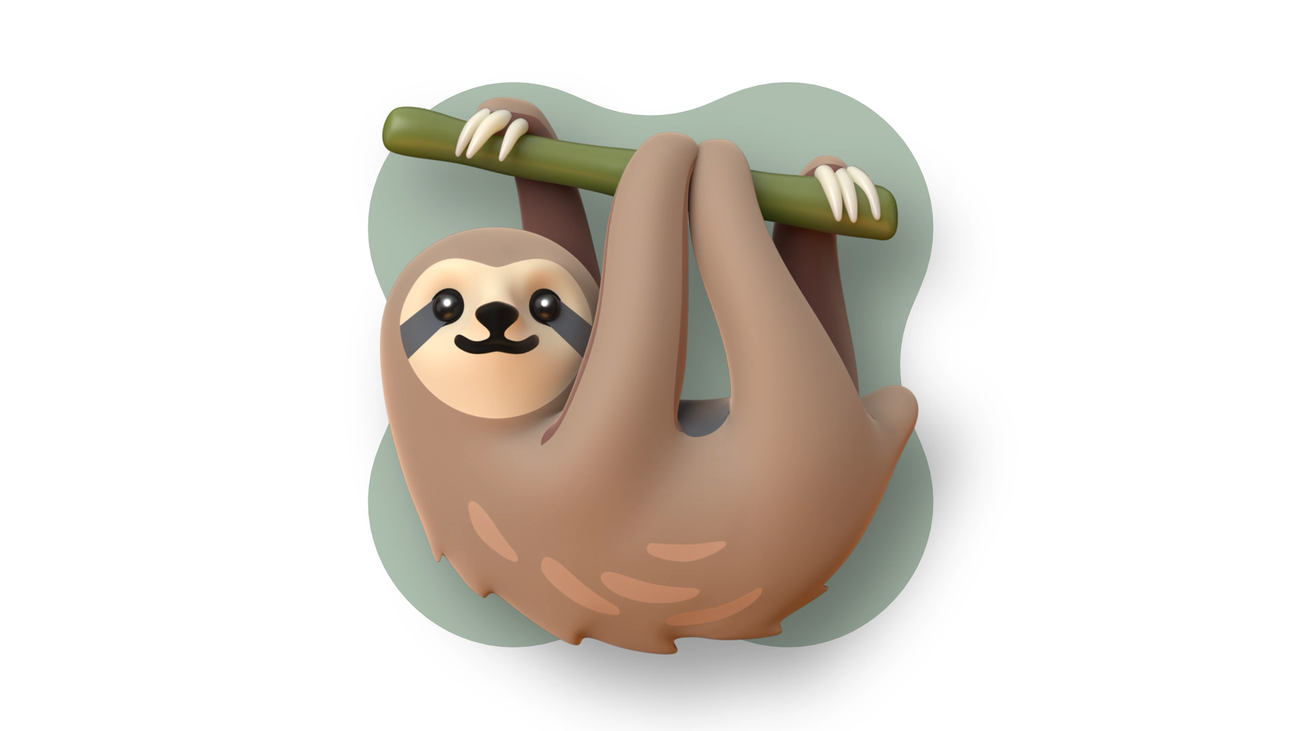
This update brings our favorite emoji into a 3D future instead of leaving them behind. The brain processes emoji faster than text, so you can’t just slap on a design and call it a day. Touching something that billions of people use trillions of times a day requires more nuance.
Our emoji have always favored expression over hyper-realism, and in this new 3D world, that means our designs can have dimensions without being photorealistic. They need a pulse and a soul – not the cold precision of industrial CAD models. Have you had a closer look at a real kangaroo? They are scary 🙀. We don’t need anatomical perfection. With the power of illustration, we can capture the true, playful mood of a kangaroo.
We also ran large user studies to evaluate how changing emoji could potentially mess with human connection. The research revealed universal truths: Users overwhelmingly prefer full-bodied animals to floating heads; adding props harms understanding; and small adjustments (like changing direction in the blink of an eye) can turn mild confusion into unintended outrage.
Although our design process still begins with 2D drawings, it no longer ends there. In an industry first, Noto Emoji 3D is completely accessible as true 3D models.
Moving from flat pixels to a three-dimensional world forced us to address architectural questions we had never considered. What does the back of a smiley face look like? Is it a concave mask, a solid bouncy ball or a flat piece of paper?