

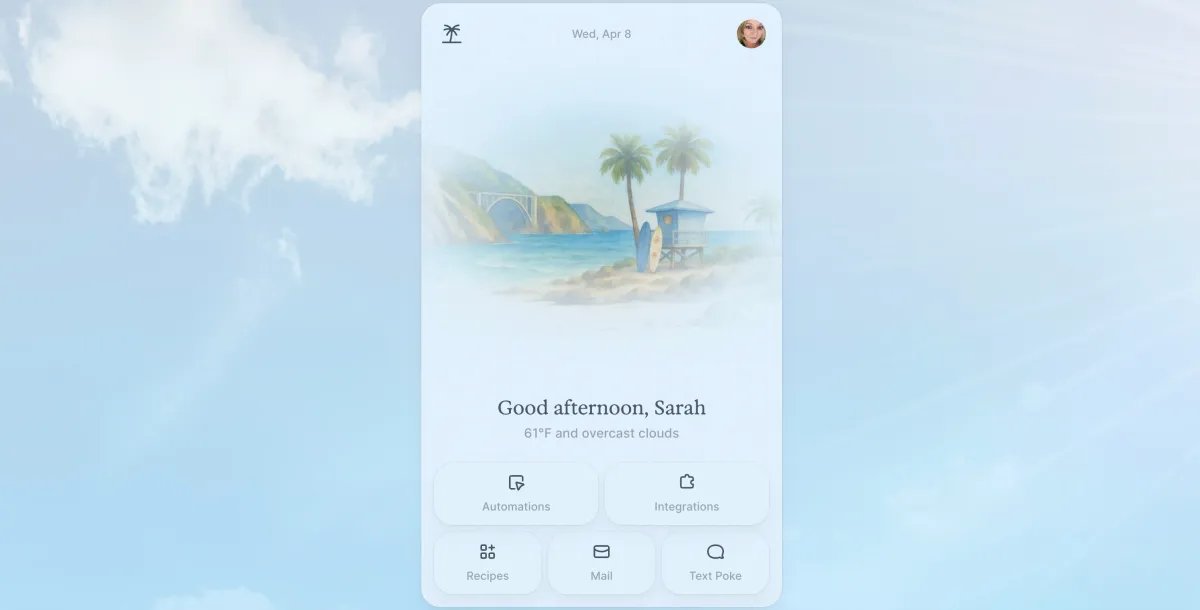
Poke, the AI assistant you text like a friend, is making its next big move. The company behind the assistant, The Interaction Company of California, has been acquired by AI coding startup Cognition in a deal that values the startup in the “low nine figures.”
The deal will bring Poke’s interaction model and personality to Cognition’s coding assistant Devin. Meanwhile, Poke will take advantage of Cognition’s models and infrastructure to become faster and more reliable, Cognition said.
What makes Poke interesting to consumers — and now to its acquirer — is how it engages with user requests. Rather than acting as a tool, Poke chats more intimately with users, reacting like a friend and even incorporating slang and humor into its interactions. This is something that can add value to Devin’s coding agent.
“You probably prefer it if you have colleagues who have personality over if you have colleagues who are just robots,” explained Interaction Company co-founder Marvin von Hagen, in an interview with TechCrunch, where he also confirmed the price of the deal. “When you have colleagues who are also software engineers, they can make a joke too. And you will find it funny and entertaining.”
The acquisition underscores a growing belief that how AI assistants interact with users will become as valuable as the underlying models that drive them. Kognition wants to make Devin feel less like software and more like a colleague.
“The Interaction team has built an agent that people love: it’s proactive, it knows you, and it’s fun to talk to. That’s exactly how it should feel to work with Devin, and now we get to build it together,” Cognition co-founder Scott Wu wrote in a blog post.
He also noted that he and Cognition co-founder Walden Yan had been angel investors in the company behind Poke.
First launched in March 2026, Poke allows users to engage with its AI agent through their choice of messaging platform, be it iMessage, SMS, Telegram or, in some markets, WhatsApp. People use Poke for a variety of tasks across categories such as travel, health, finance, planning and education.
Von Hagen noted that productivity tasks like managing emails, reminders and to-dos were among Poke’s most common use cases.
Over the past three months, Poke users have exchanged more than 100 million messages on the platform, Cognition said. But despite being used by hundreds of thousands of people, Poke had been expensive to run, making it difficult to make money, von Hagen said.
In June, Poke became the first AI agent approved to run on Apple’s Messages for Business platform, which provides businesses with a standardized experience for managing their customer communications in Apple’s Messages app.
Going forward, nothing will immediately change for Poke through the end of the year, we are told. Poke plans to remain on Apple’s platform.
Next year, however, the team will experiment with how both Poke and Devin can improve, with Poke turning to Cognition’s latest software engineering model SWE-1.7 for some tasks. A complete combination of the two products is also not excluded.
“I think in the long run Poke can be more reliable orchestrating all this coding [tasks]…and at the same time, Devin could become more like Poke,” said von Hagen. “Like right now, Devin can only do one PR—pull request—at a time…I think there’s a lot of value in letting Poke orchestrate different Devin sessions.” Plus, Poke could help Devin remember tasks across different sessions.
“It would be good to have a persistent colleague,” he added.
When you buy through links in our articles, we may earn a small commission. This does not affect our editorial independence.