
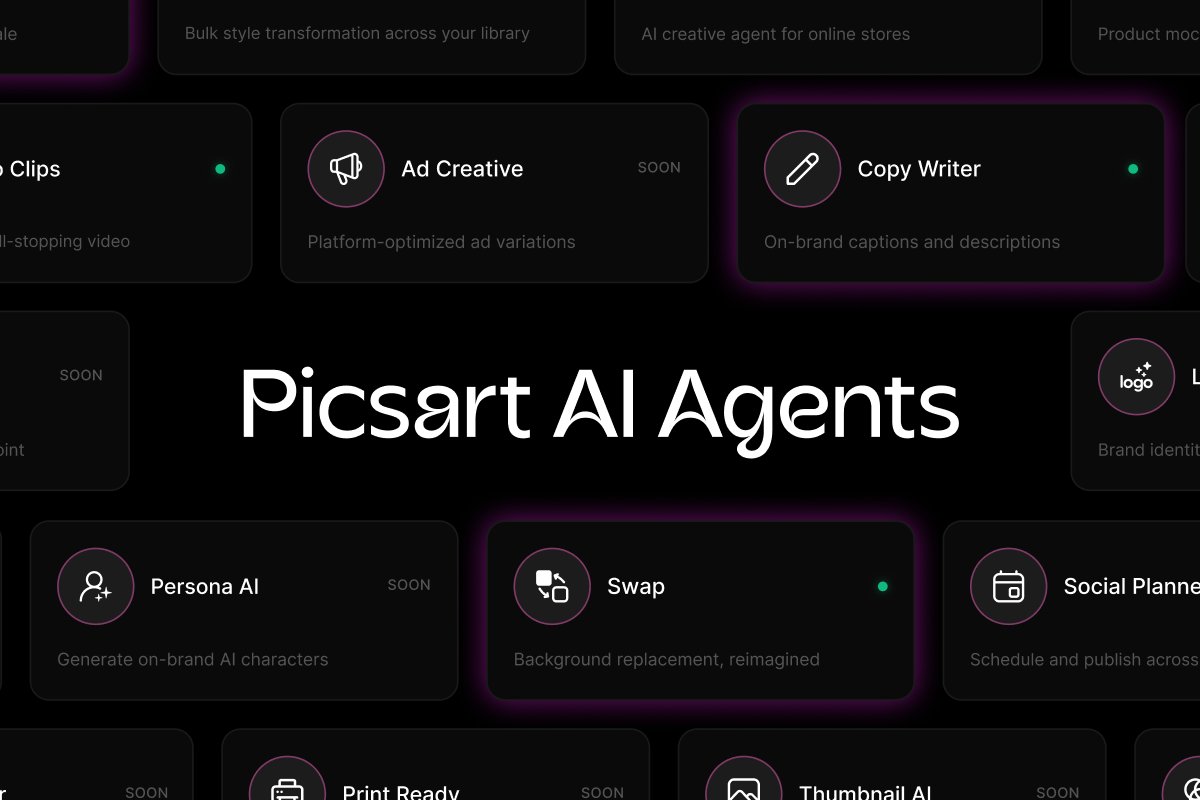
AI-powered design platform Picsart is launching an AI agent marketplace that allows creators to “hire” AI assistants to help them with specific tasks, like resizing and remixing social content or editing product images on Shopify.
With over 130 million worldwide users skewing Gen Z, Picsart is like a more advanced Canva for social media managers and content creators. The company reached unicorn status amid the creative economy boom in 2021, but has remained relevant by continuing to grow its AI-powered products to serve the current market.
The timing is good for Picsart to launch such a marketplace, as viral projects like OpenClaw have fueled industry demand for agentic AI chatbots that can carry out requests like a personal assistant.
“Creators have been stuck as the operator of any workflow – the doer, not the decider,” said Hovhannes Avoyan, Picsart founder and CEO, in a statement. “Our agents change that relationship – you set direction, the agent builds a plan using real data, you approve, it executes.
Picsart says it will introduce more specialized agents each week, but initially creators can work with four different agents: Flair, Resize Pro, Remix, and Swap.
Perhaps the most sophisticated of the bunch, the Flair agent integrates with Shopify to act as an assistant for online store owners. The agent analyzes market trends to make recommendations on how a store can improve, e.g. suggest it edit product images to look more cohesive. In a future update, Flair will be able to run A/B tests and identify underperforming products to proactively offer recommendations on how a creator can improve their sales.
The Resize Pro agent can resize images and videos to the recommended dimensions on different platforms, but it uses AI to generatively expand the frame if the original media is not conducive to a certain size. The AI will reportedly ensure that resized images look like they were composed on purpose and not just randomly cropped.
Techcrunch event
San Francisco, CA
|
13.-15. October 2026
The Remix agent invites the creator to describe a style such as “vintage film”, “watercolor” or “cyberpunk” and edit an existing photo library to fit within that theme, while the agent feature allows users to change the background of images in bulk.
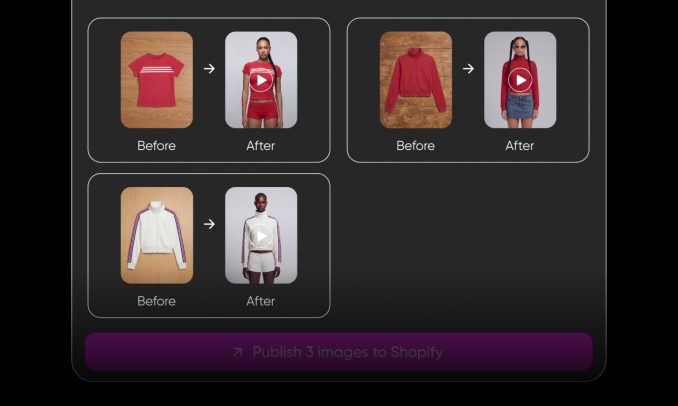
For an agent like Flair, which is supposed to work behind the scenes asynchronously to analyze store data, it would be especially useful for users to be able to chat with these agents on WhatsApp or Telegram. Picsart integrates with these apps specifically as their APIs allow businesses to set up AI chatbots; however, as more platforms add similar tools, functionality may expand.
“As agents expand into messaging apps that creators already use, that conversation happens anywhere—at your desk or from the subway,” Avoyan added.
In some cases, AI agents can prove problematic, as any LLM-based software has the potential to hallucinate and potentially take actions that the creator did not intend. But Picsart allows users to set “autonomy levels” for agents like Flair, which allows for creator approval to be required before any action is taken. These agents should also be less vulnerable to prompt injection attacks than more public-facing agents, assuming Picsart doesn’t roll out agents that interact more directly with customers or the Internet at large.
Like many other AI tools, Picsart offers a free plan with just a few AI credits each week, but users can get significantly more capacity when they pay for premium plans, which start at around $10 per month. month when they are billed annually. To use an AI agent, you’ll likely need a paid plan.